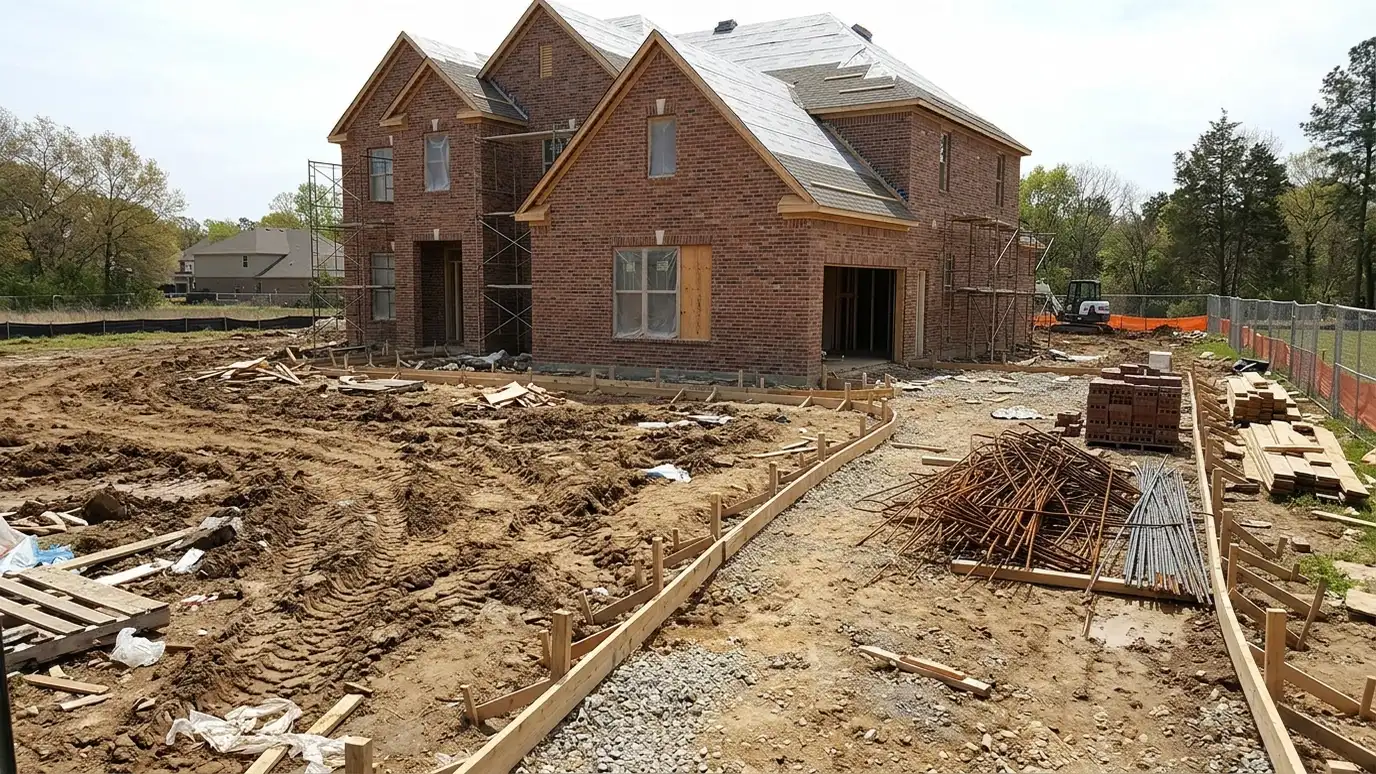
A new build needs concrete poured in the right order. Here is how to plan footings, slabs, drives and walks around the other trades.
A new build has a long list of concrete: footings, foundation walls, the garage and basement slabs, then the driveway, walks, porches and patio. Each piece has its own timing. Footings come first, flatwork comes last, and a missed window means working around finished landscaping or heavy equipment. The lot also starts with disturbed soil, fill and grading that must be compacted before any slab goes down.
Good planning starts with the plans and the schedule. We confirm elevations, locate utilities and sleeves, check drainage and agree on pour dates with the builder. Forms are checked before the truck arrives, and curing is protected so new slabs gain strength evenly. For owners building custom homes, we explain each pour in plain language so you know what is happening and why.
Footings first, flatwork last.
Fill settles without it.
Before every pour.
Away from the house.
On the builder schedule.
Strong and even.
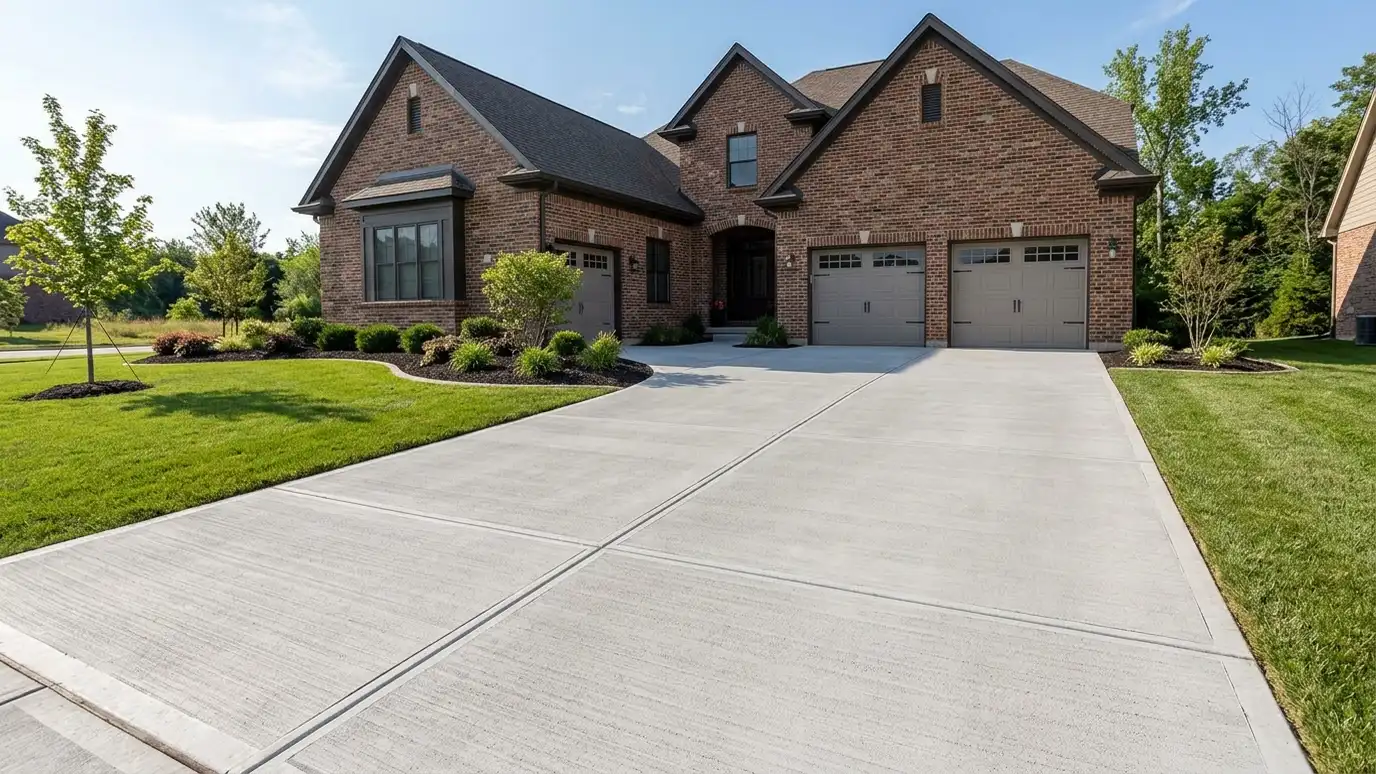 Concrete DrivewaysNew concrete driveways poured on a compacted base with the right thickness, reinforcement and joints to carry your…Explore
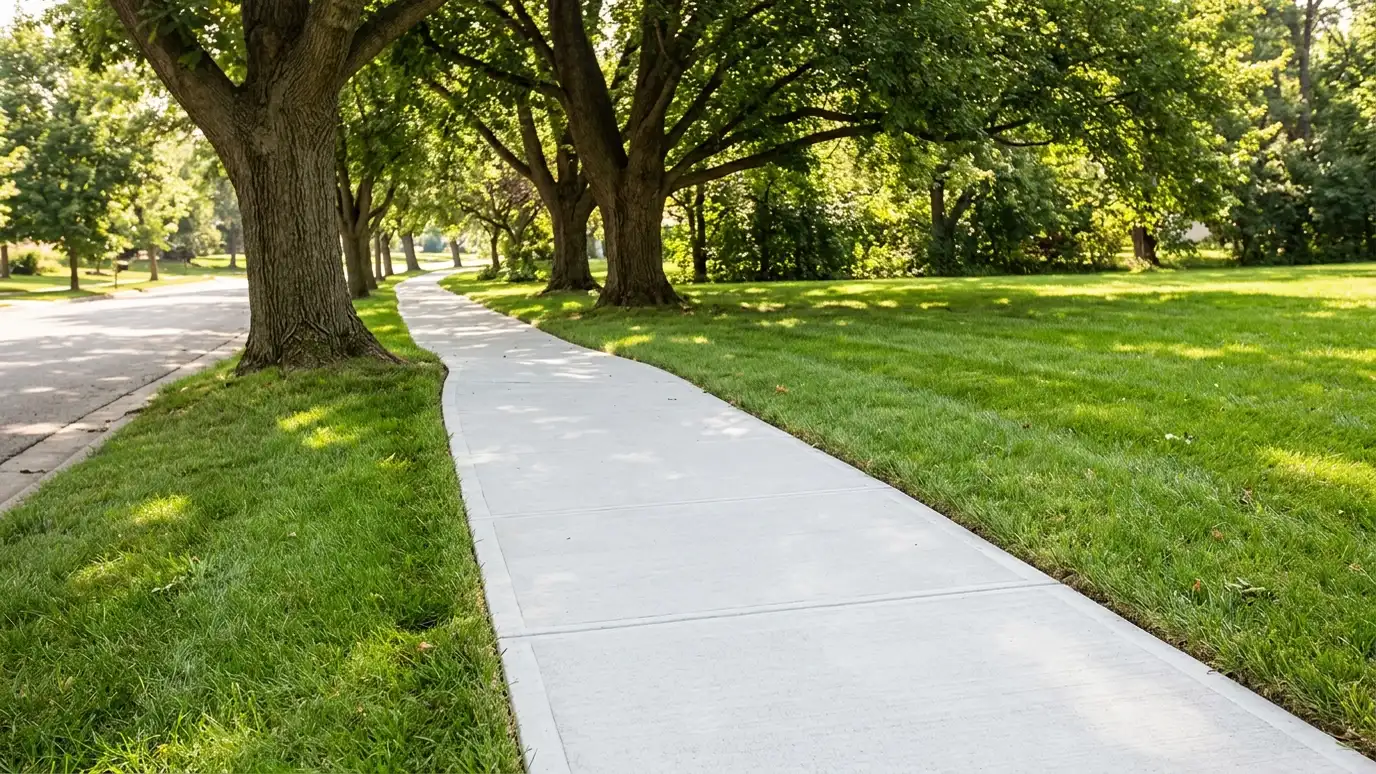 Concrete SidewalksSafe, level concrete sidewalks that handle foot traffic, strollers and wheelchairs, with joints and edges built to stay…Explore
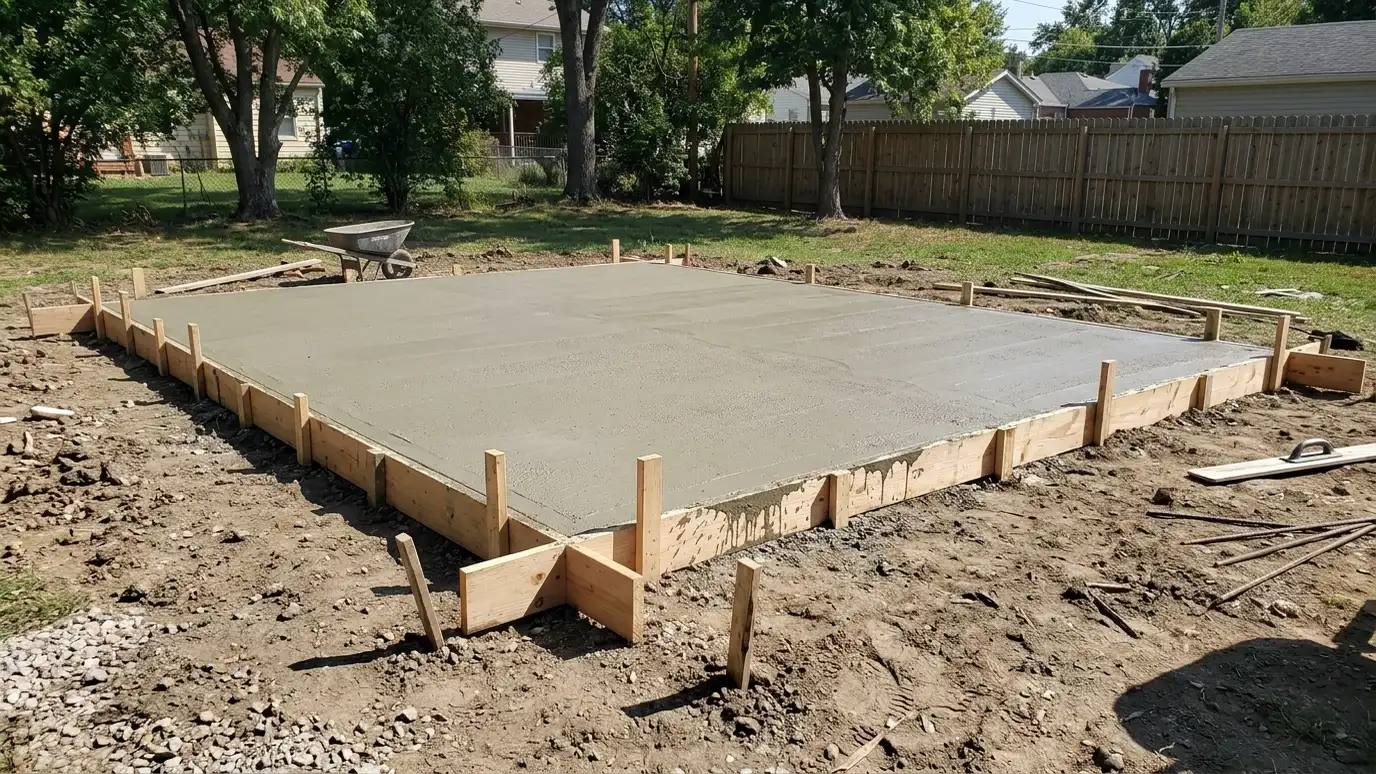 Garage and Shed SlabsLevel, reinforced slabs for garages, workshops and sheds, poured on a prepared base with thickened edges where walls…Explore
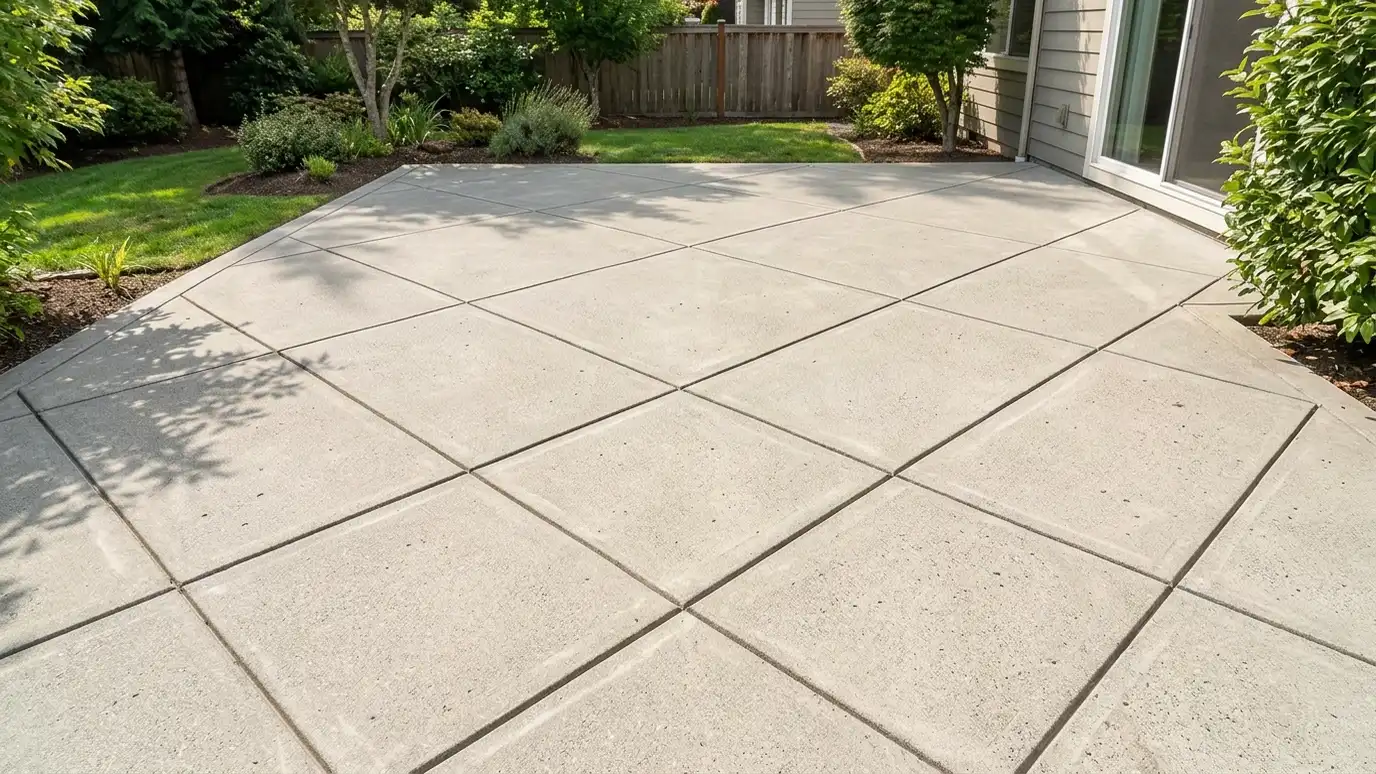 Saw Cutting and ScoringClean saw cuts and scored patterns that control cracking and add a custom grid, diamond or border design…Explore
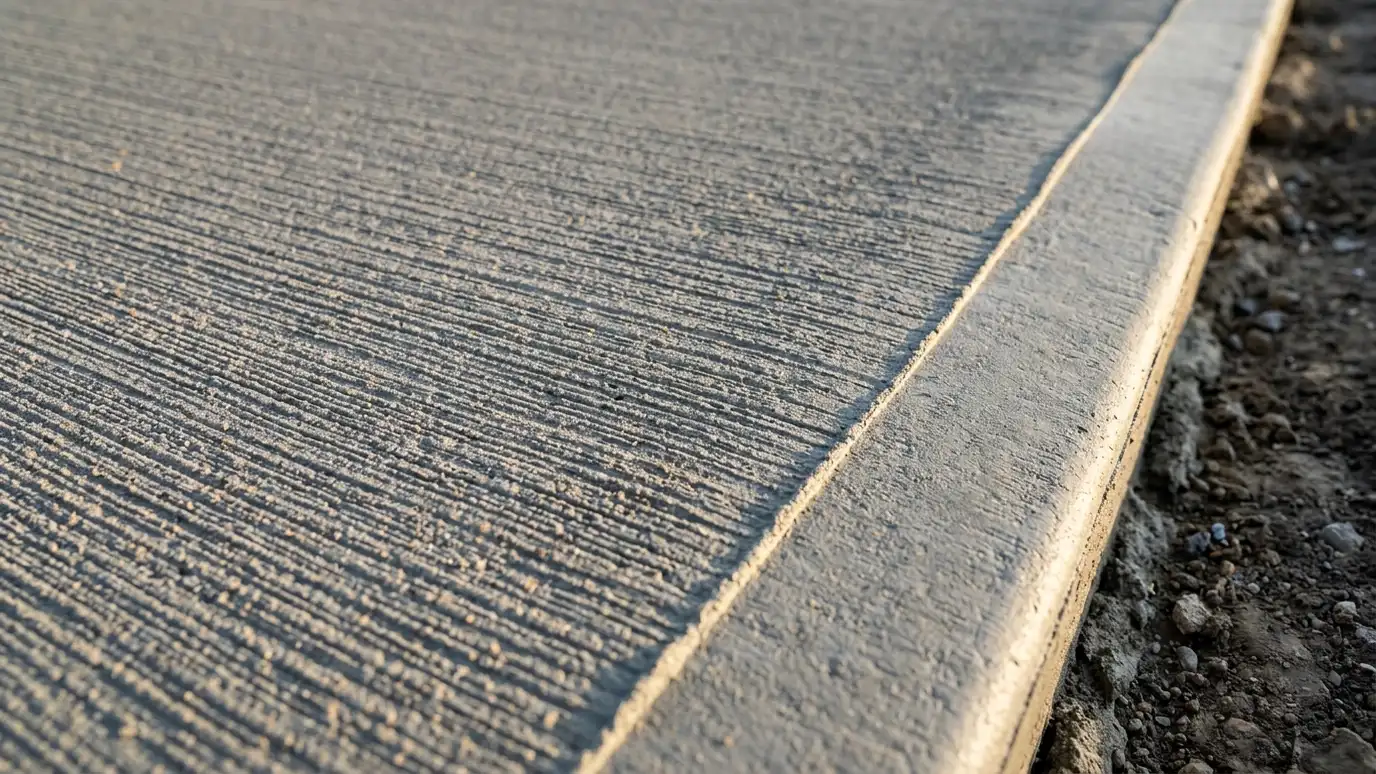 Broom and Textured FinishesSimple, durable broom and textured finishes that give grip on driveways, walks and ramps at a friendly price.Explore
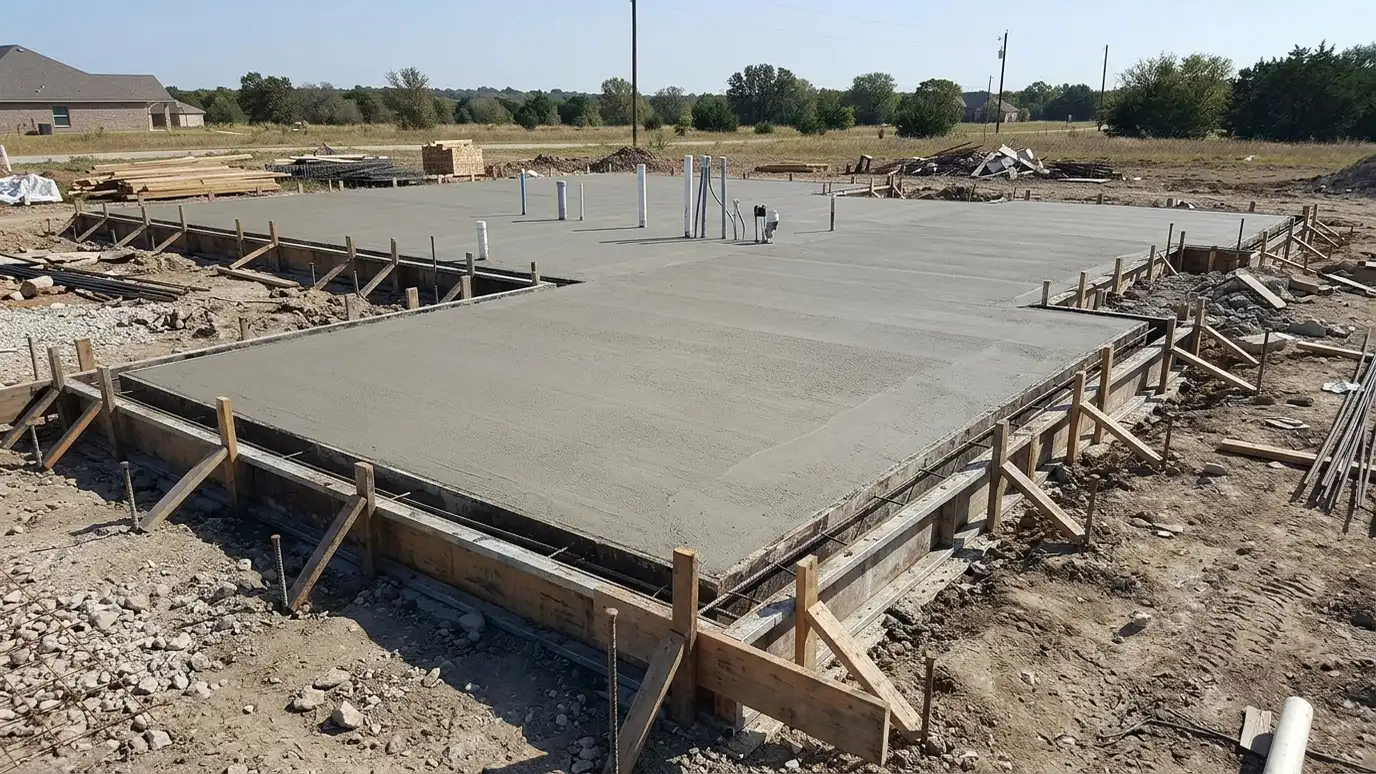 Concrete FoundationsPoured concrete foundations for homes, additions and outbuildings, built level and square on soil that has been checked…Explore
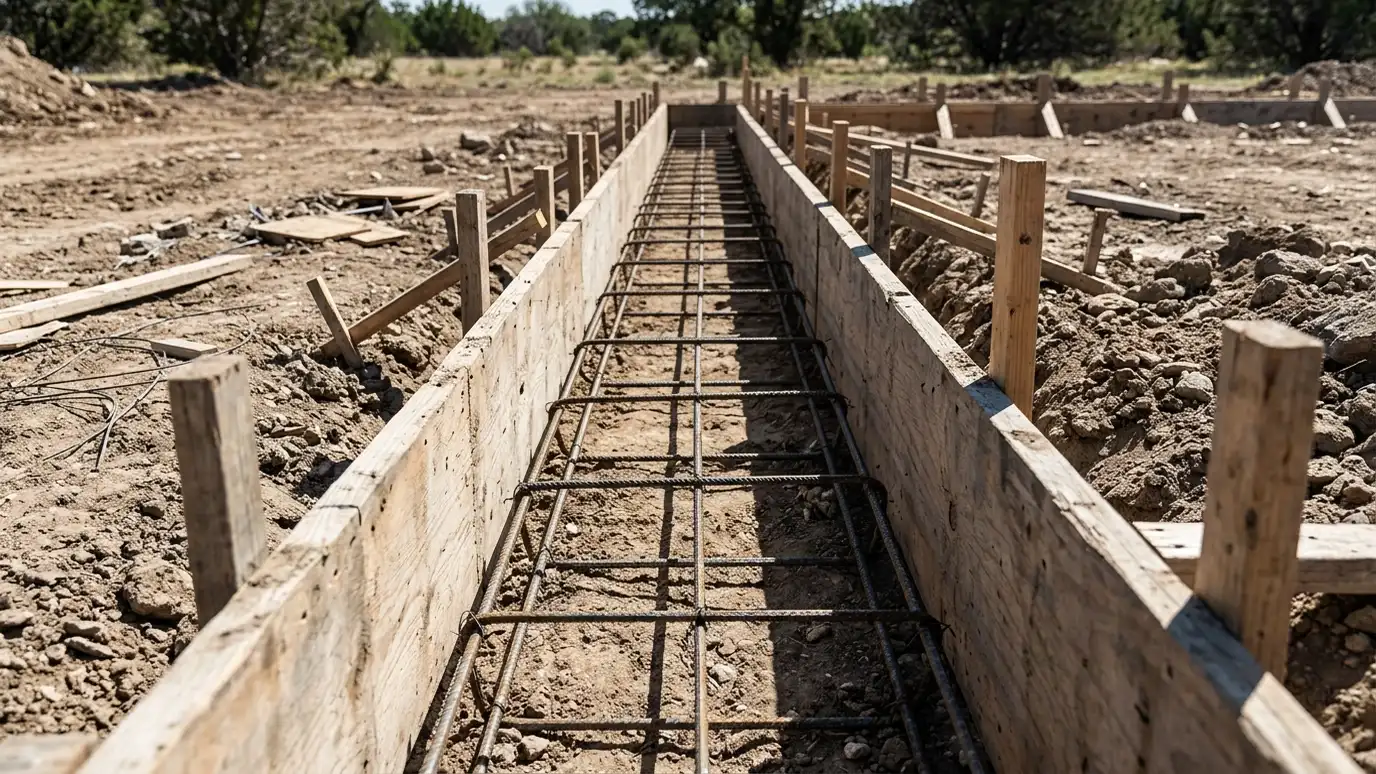 Concrete FootingsProperly sized and reinforced footings for houses, additions, decks, porches and walls, poured on firm soil to the…Explore
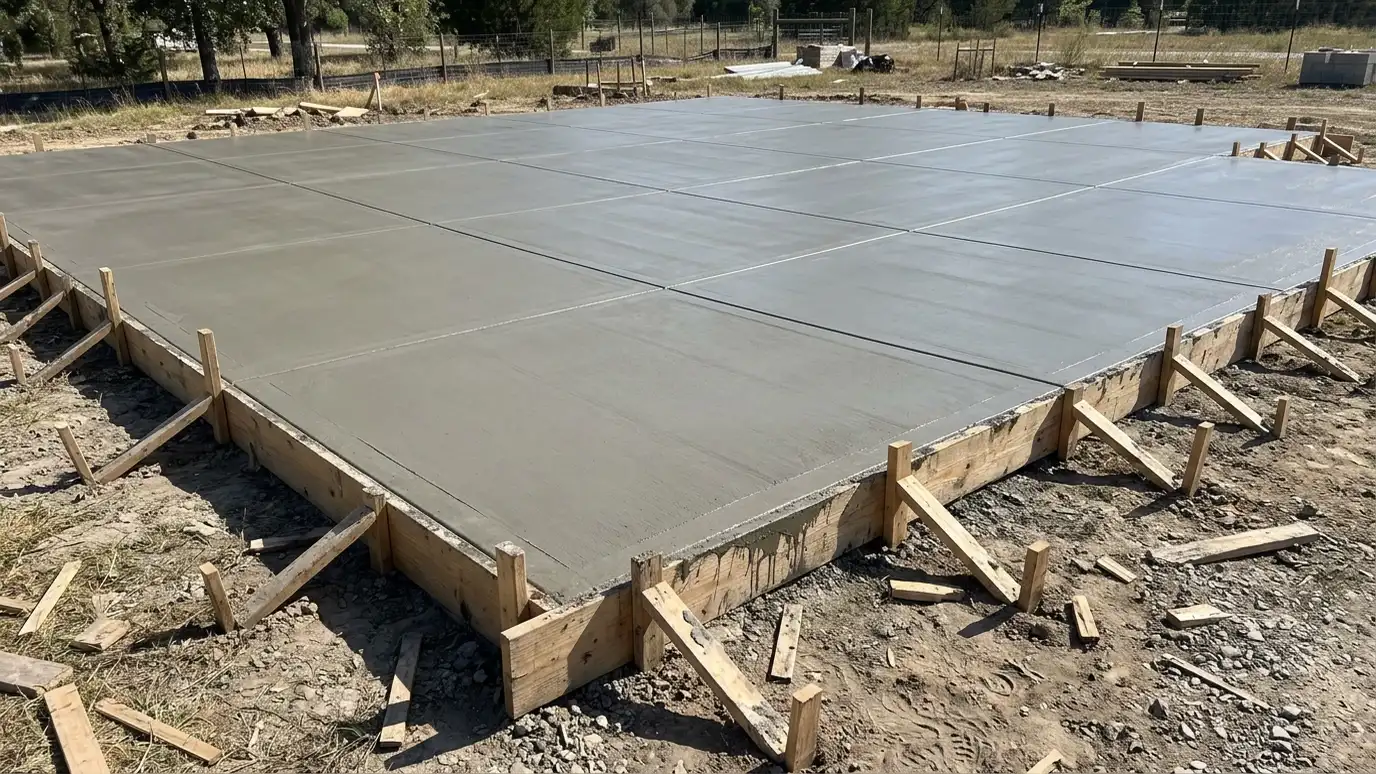 Slabs on GradeReinforced slab-on-grade floors for homes, additions and shops, poured on compacted stone with a moisture barrier and planned…Explore
Take the quiz, check a problem or ballpark a budget.
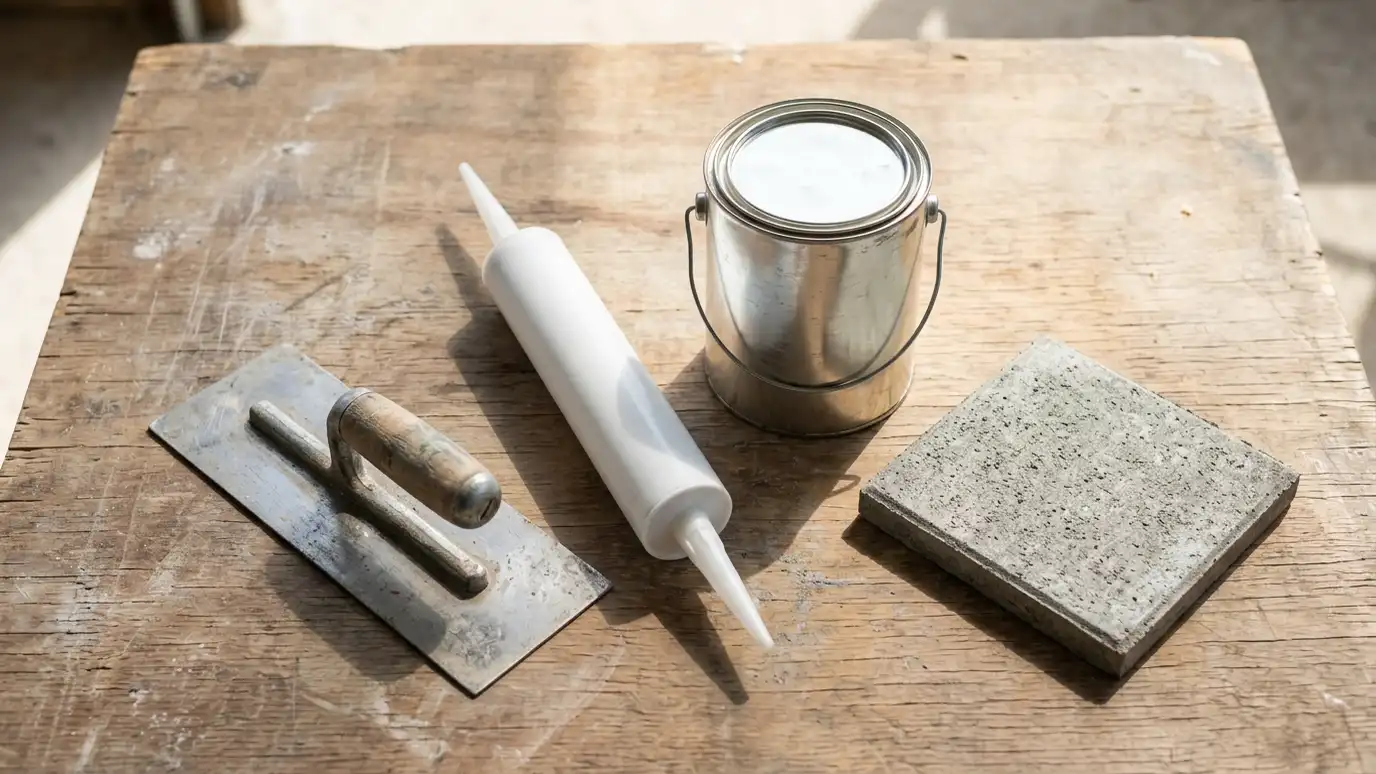 Which Concrete Service Do I Need? QuizAnswer five questions about your slab, your site and your goals to see whether you need repair, lifting, resurfacing or replacement.Try it
 Concrete Problem CheckerCheck the signs you see in your concrete and get a likely cause with the next step.Try it
 Concrete Budget PlannerPick a project, a size and a finish and get a ballpark planning range.Try it
After heavy construction traffic is finished, so the new slab is not damaged by trucks and equipment.
New fill settles over time, and a slab on loose soil will crack or sink.
Yes. We can plan sleeves, grades and tie-in points now to make later additions easier.
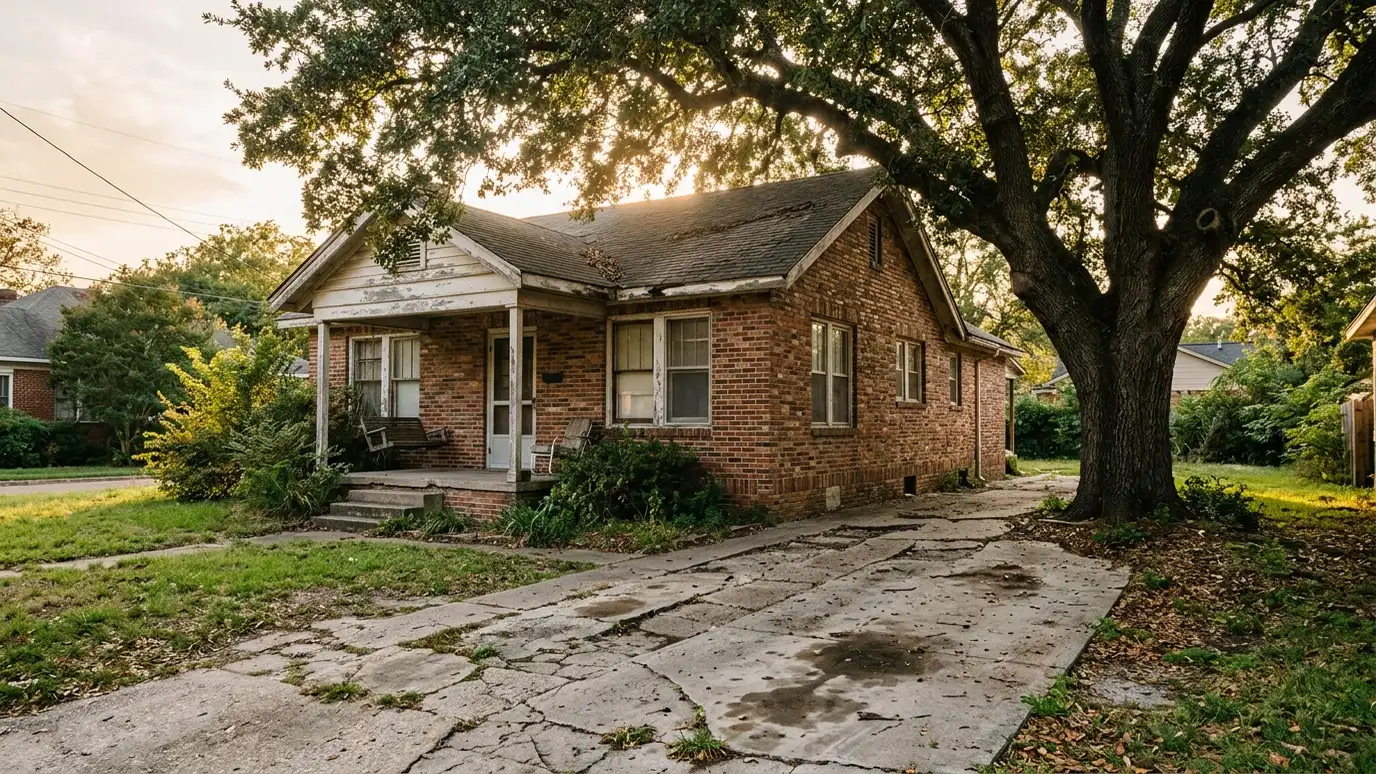 Site situationOlder Homes and Cracked ConcreteOld slabs crack, settle and stain. Here is how to decide between repair, lifting, resurfacing and replacement.Learn more
 Site situationSloped and Hilly LotsHills mean steep drives, walls and runoff. Here is how to plan concrete that stays put and drains…Learn more
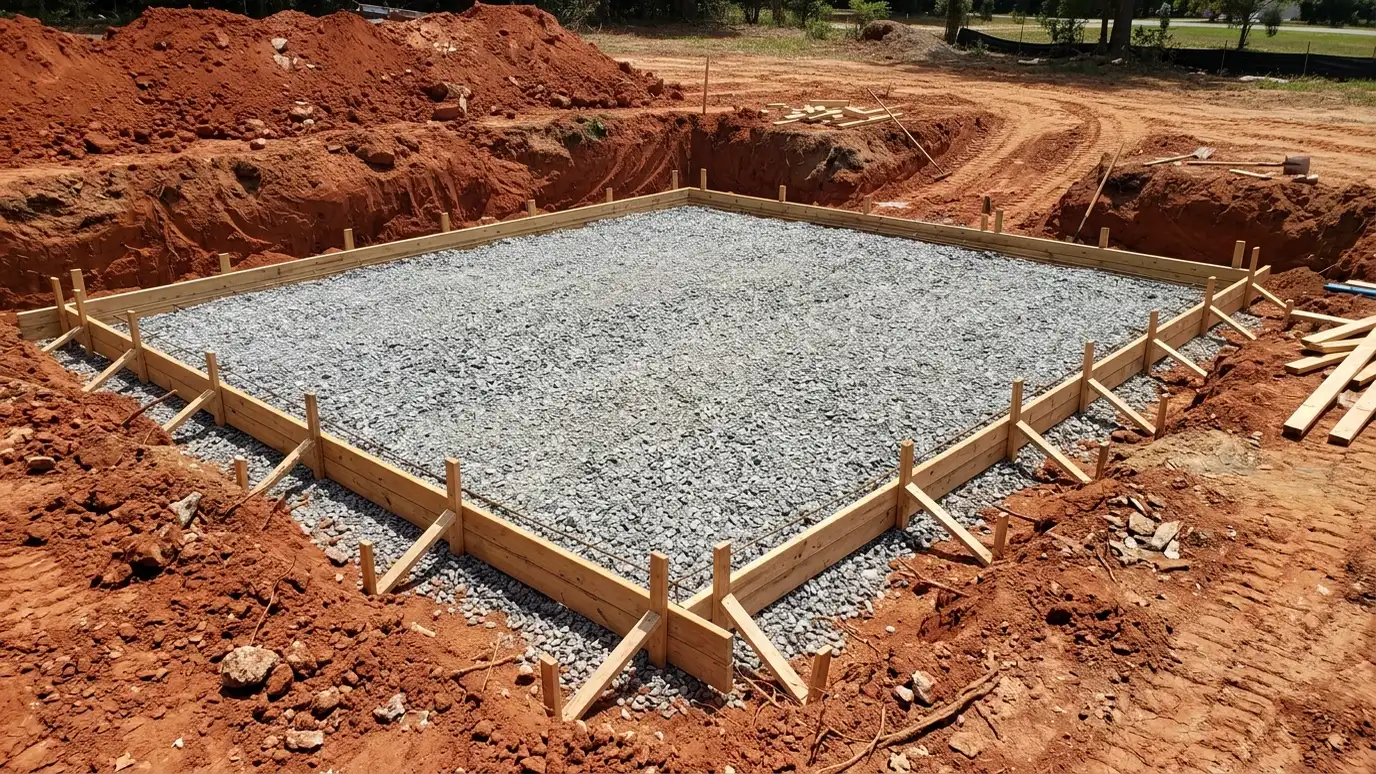 Site situationRed Clay and Poor SoilRed clay swells when wet and shrinks when dry. Here is how a good base keeps concrete from…Learn more
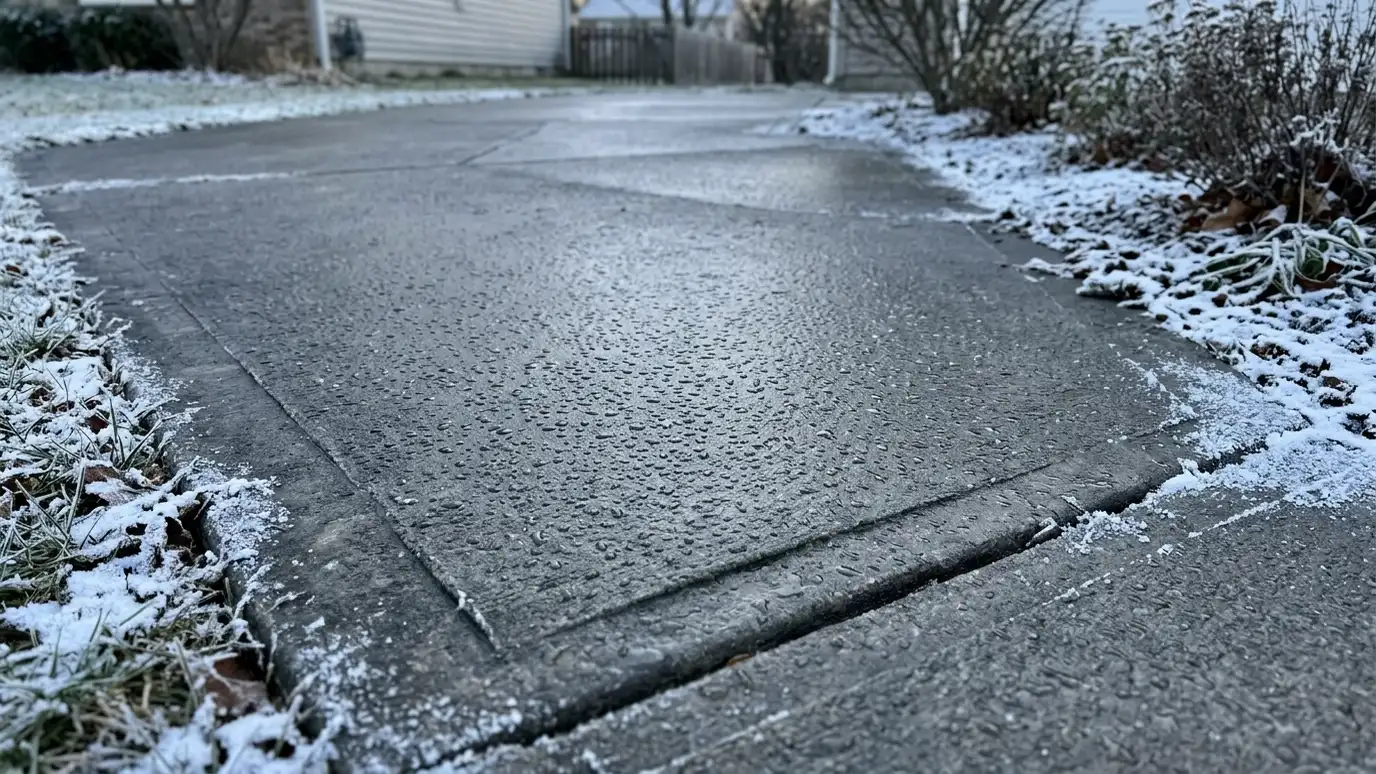 Site situationFreeze-Thaw and Winter WeatherWater in concrete freezes and thaws all winter. Here is how air entrainment, sealers and good drainage protect…Learn more
Call us and we will walk your site, check the soil and drainage and give you a clear plan and a written scope for new concrete, repair or sealing.