Why seal concrete
Concrete is porous, and water, salt and oil soak into it. Water freezing inside causes scaling and spalling, and stains are hard to remove. A sealer keeps these out, and many also deepen color and make cleaning easier.
Sealing is one of the lowest-cost ways to extend the life of a slab.
Types of sealers
Penetrating sealers soak in and leave a natural look. Acrylic sealers form a film that adds gloss and color depth. Epoxy and polyurethane coatings are tougher and used in garages and shops.
Each type has trade-offs for traction, durability and appearance.
When to apply
New concrete should cure first, often for about a month, before sealing. Existing concrete can be sealed when it is clean and dry. Fall and spring, with mild, dry weather, are ideal.
Avoid sealing in hot sun, near freezing or just before rain.
Preparation
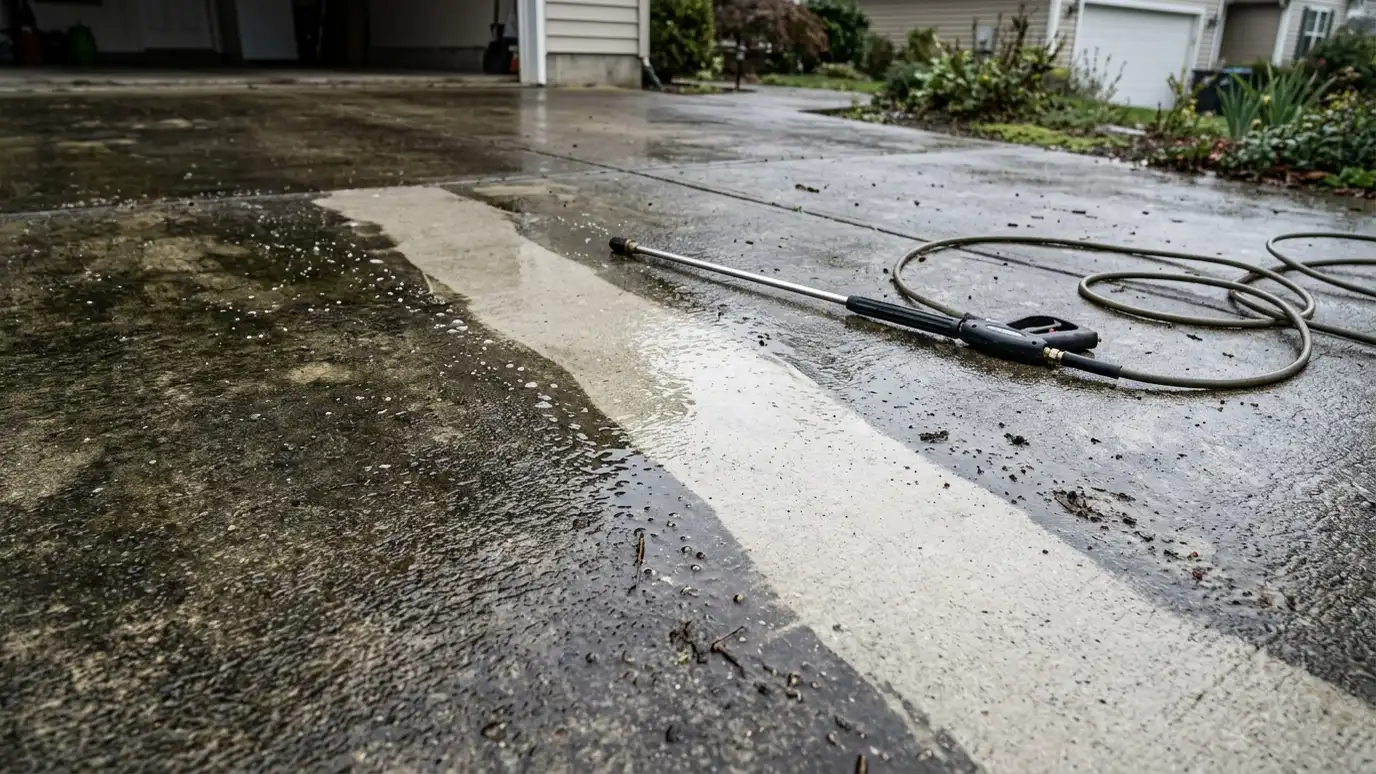
The surface must be clean, dry and free of oil, efflorescence and old coatings. Pressure washing and cleaners prepare the surface, and cracks and joints should be repaired first.
A poorly prepared surface leads to peeling and cloudiness.
Application
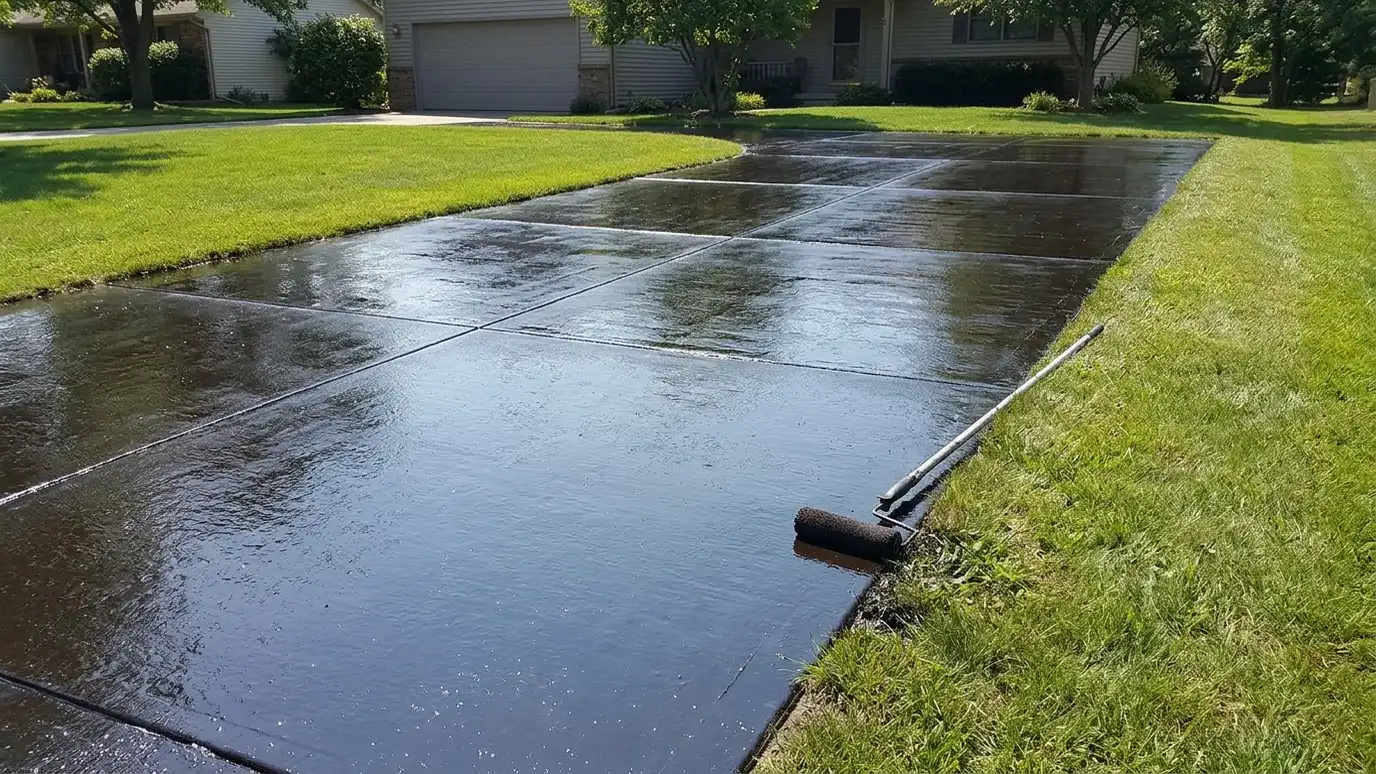
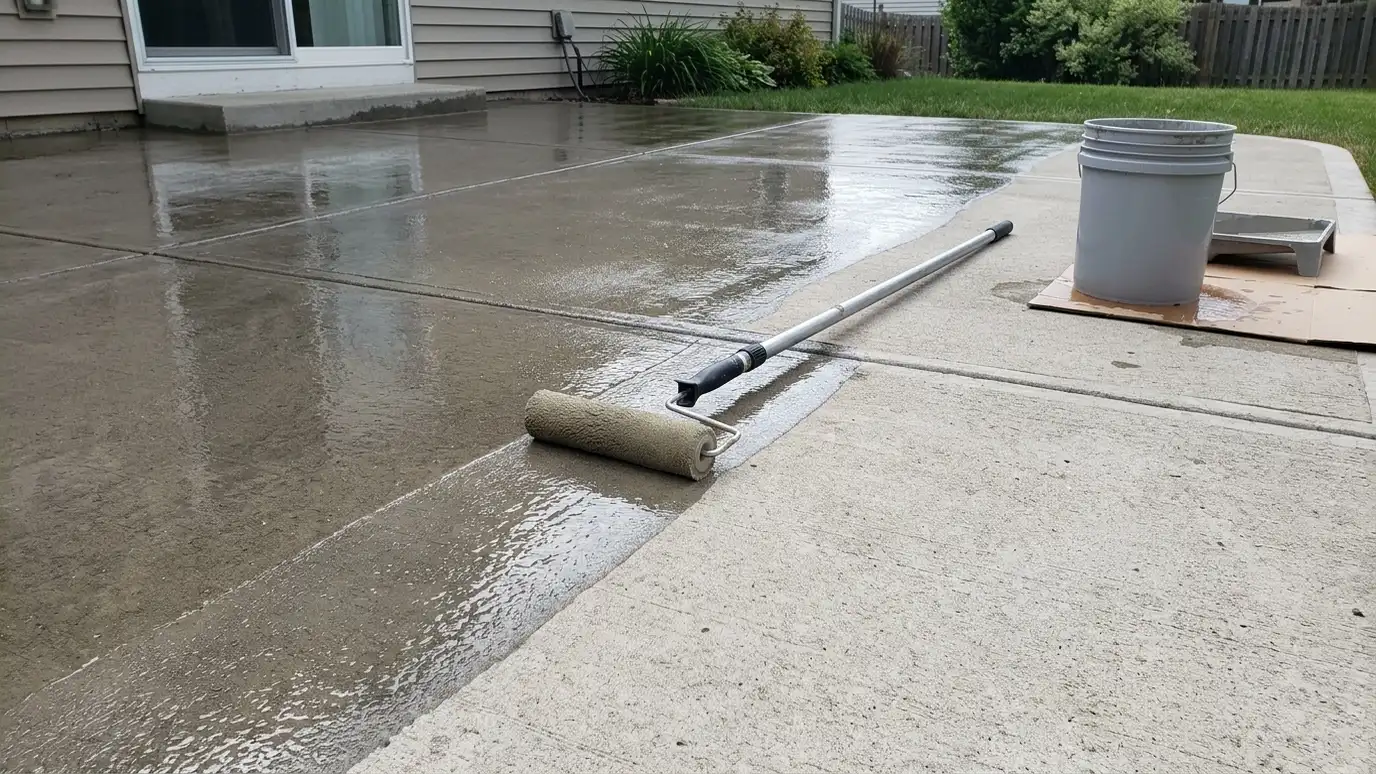
Sealers are sprayed or rolled in thin, even coats. Applying too much sealer causes bubbling and a milky finish. A slip-resistant additive can be included on pool decks and stamped concrete.
We follow the product maker's directions, since each sealer has its own limits.
How often to reseal
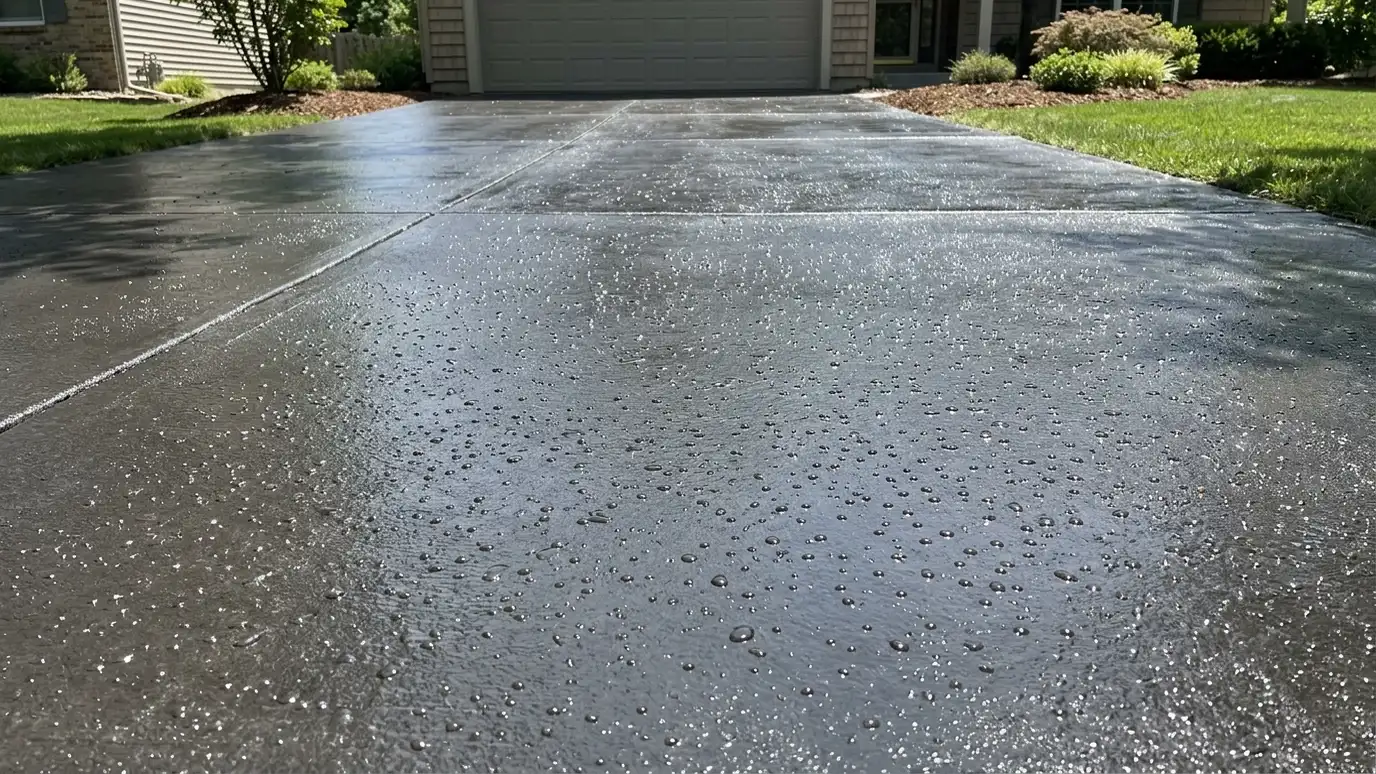
Most sealers last two to five years, depending on the product, traffic and sun. When water no longer beads on the surface, it is time to reseal.
Regular resealing keeps stained and stamped concrete looking new.
Clean, dry, thin coats at the right time, repeated every few years, protect a slab better than any repair.