Start with a sweep
Sweep away loose dirt, leaves and debris, then rinse. Many surface stains lift easily with a stiff brush and a mild cleaner.
Do this regularly, since dirt traps moisture and feeds mildew.
Oil and grease
Fresh oil should be soaked up with an absorbent such as cat litter, then scrubbed with a degreaser. Older stains may need a poultice or a stronger cleaner, and some will fade but not vanish.
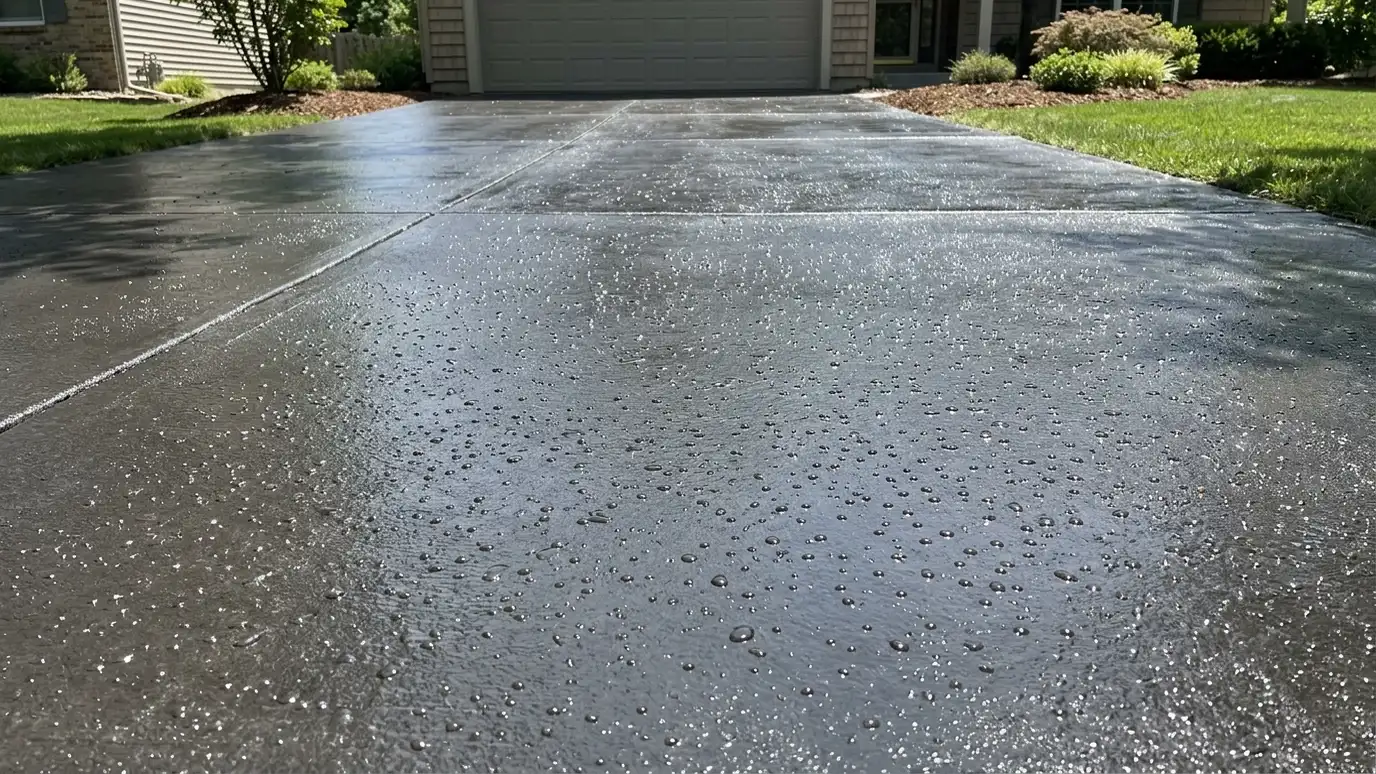
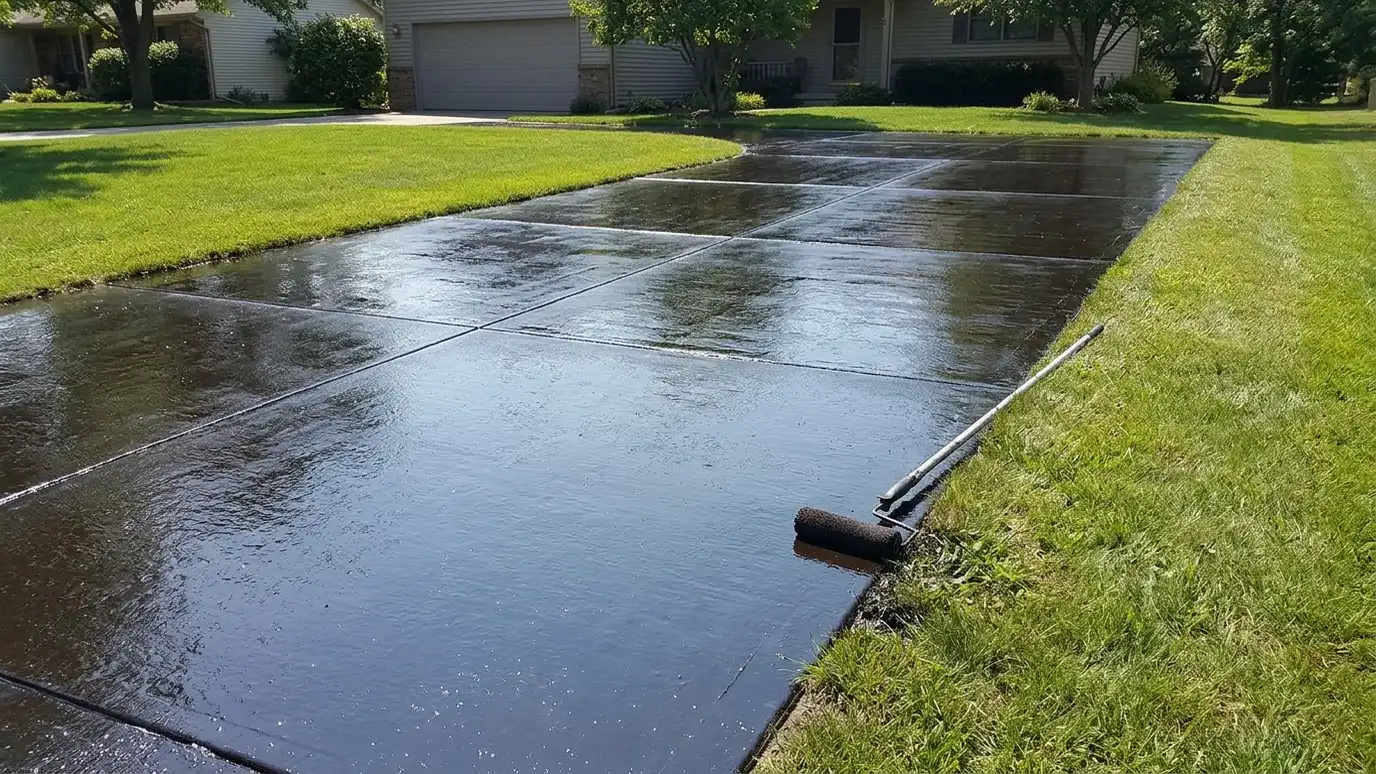
Sealing helps keep new spills from soaking in.
Mildew and algae
Shaded and damp areas grow green or black growth. A cleaner made for the purpose, with a brush and rinse, removes it. Trimming plants and improving drainage keeps it from coming back.
Slick growth is also a slip hazard.
Rust and mineral stains
Rust from furniture and fertilizer, and stains from hard water, need cleaners made for those stains. Test a small area first.
Acid products can etch concrete, so they should be used carefully.
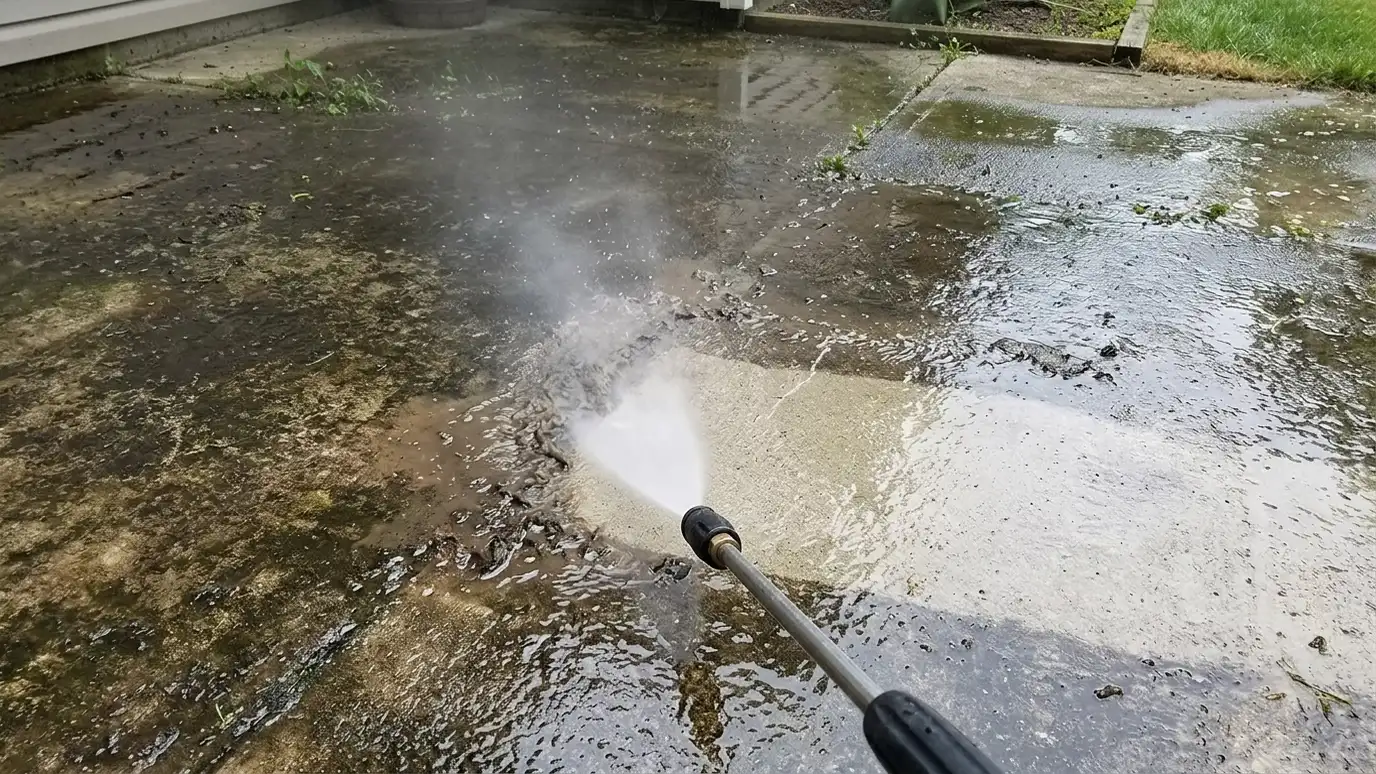
Pressure washing
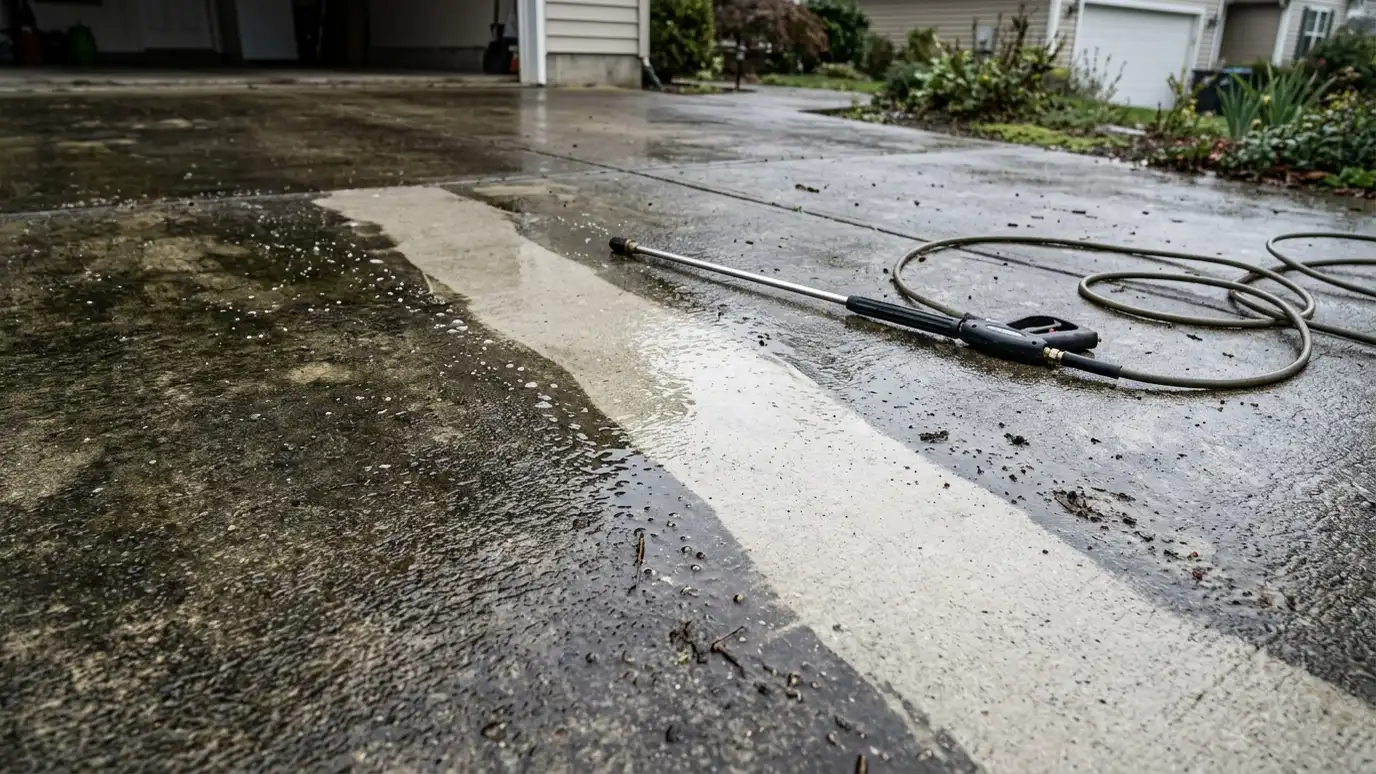
A pressure washer is powerful, so use the right nozzle and distance to avoid etching or loosening stones. Decorative and exposed aggregate surfaces need extra care.
We can wash safely and recommend a sealer afterward.
Routine care
Seal every few years, keep joints filled, fix small cracks and keep gutters and drains working. These simple steps do more than any deep cleaning.
A little care each season keeps concrete looking new.
Clean early, use the gentlest method that works and reseal so stains have a harder time sticking.