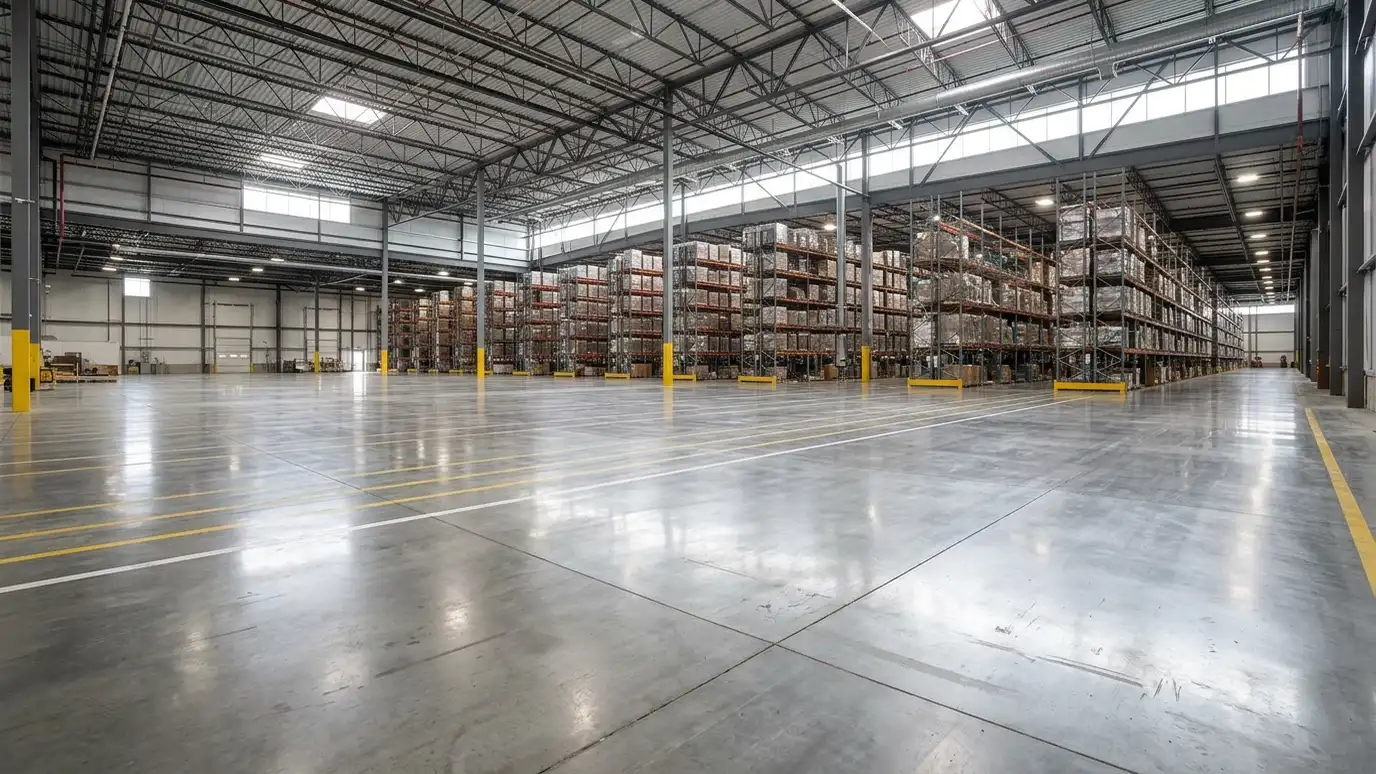
Flat, hard, joint-planned concrete floors for warehouses and shops, built for forklifts, racking and heavy equipment.
A warehouse floor is a tool. Forklifts run over it all day, racking stands on it and flatness affects how high and how fast loads can be moved. Joints that spall make a bumpy ride and damage wheels, and a floor that dusts coats products and equipment. A shop floor in Nashville that handles machinery and chemicals needs hardness, flatness and a plan for joints and coatings from the very start.
We build industrial slabs to the specification. Subgrades are proof-rolled and compacted, stone bases and vapor barriers go in and slabs are poured in large placements with laser screeds for flatness. Joints are planned with dowels and armored edges where heavy wheels cross. After power troweling, we cure, saw cut and fill the joints with semi-rigid material. Surface hardeners, densifiers and sealers cut dusting, and coatings add chemical resistance where needed. We also repair damaged joints and slabs in operating buildings. We discuss forklift traffic, racking loads, chemical exposure and flatness needs up front, then set slab thickness, joint layout and finishing methods to match, so the floor performs as your operation requires.
Laser screeding gives smooth floors that let trucks move fast and racks stand true.
Dowels and armored edges keep joints from breaking under heavy wheels.
Densifiers and hardeners cut dust and wear.
Chemical resistant coatings suit wash-down, food and shop areas.
Drag the handle to compare.
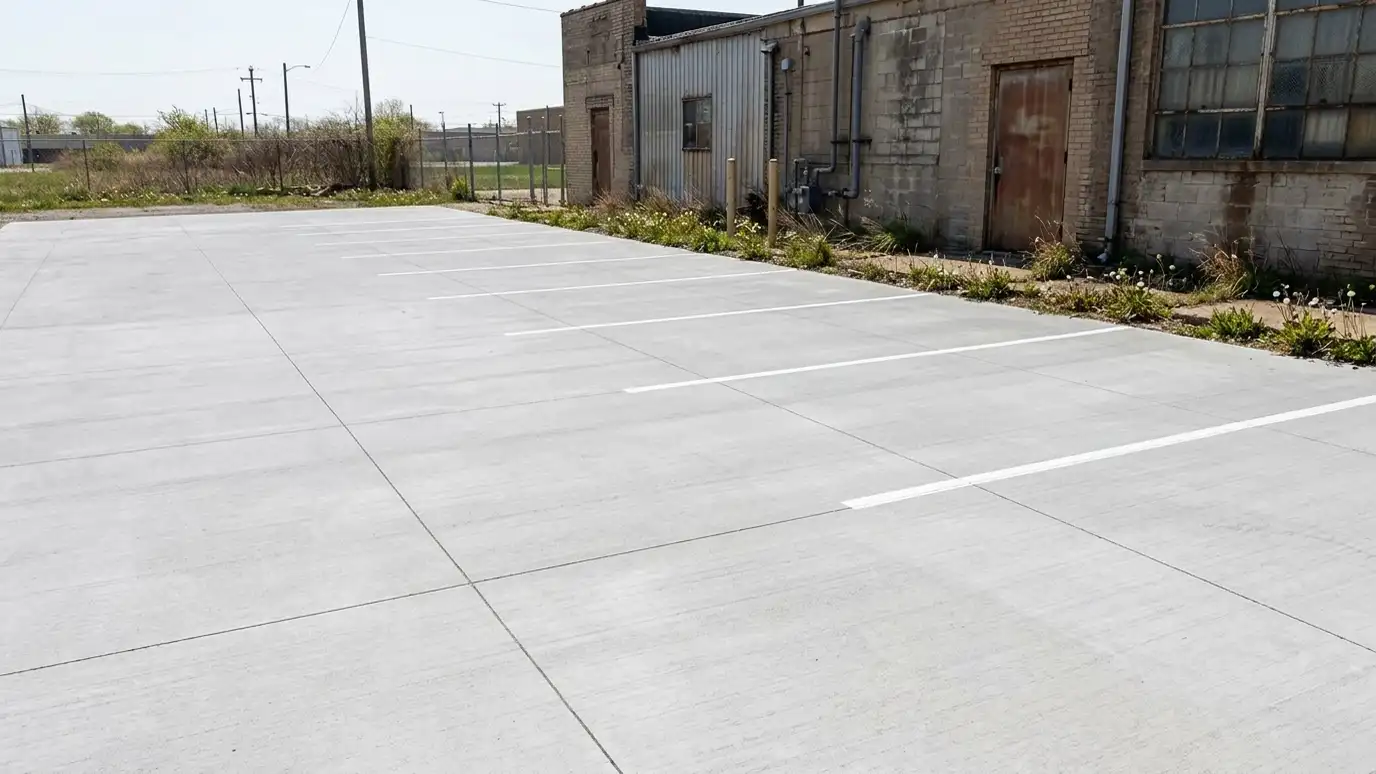
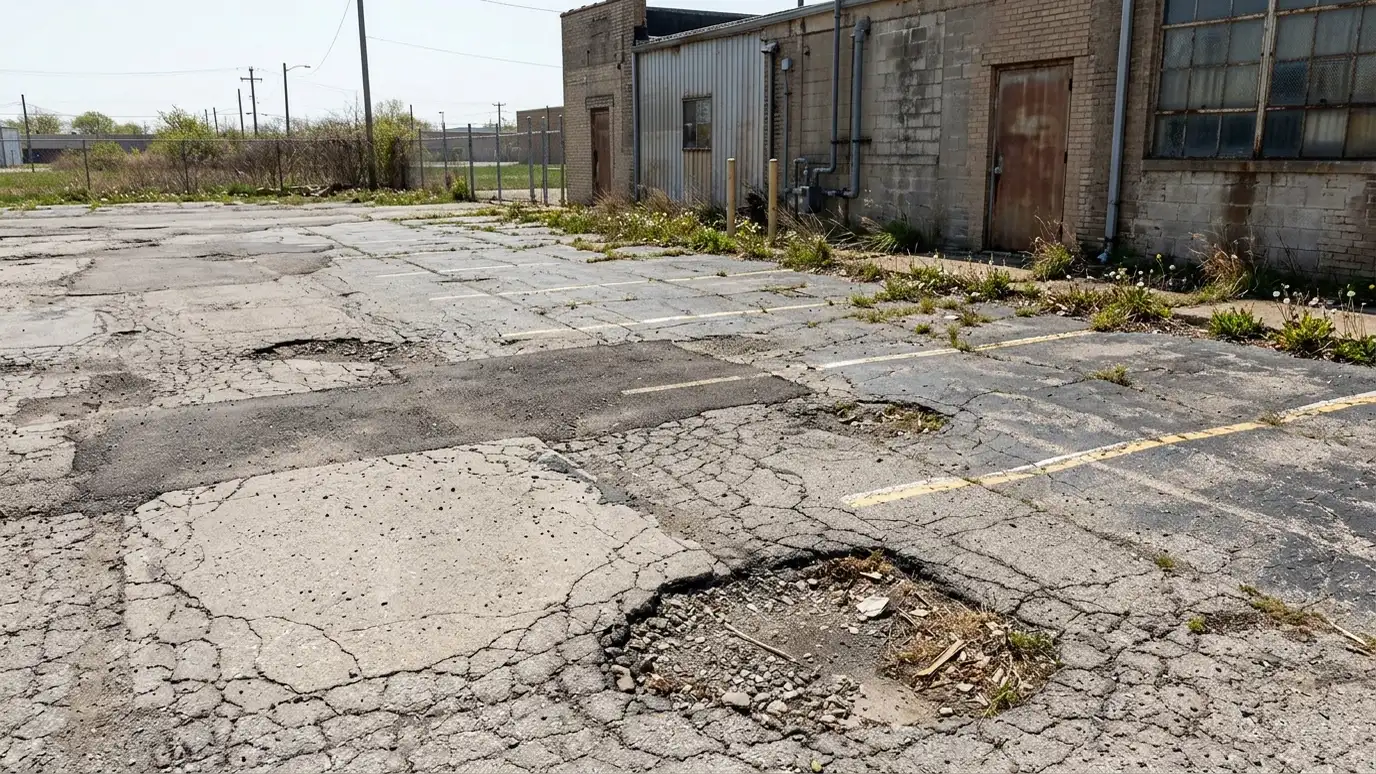 BeforeAfter
Flat and hard.
Edges protected.
Densified.
In live buildings.
Chemical resistant.
Documented.
Every topic has its own page with what to expect and how we approach it.
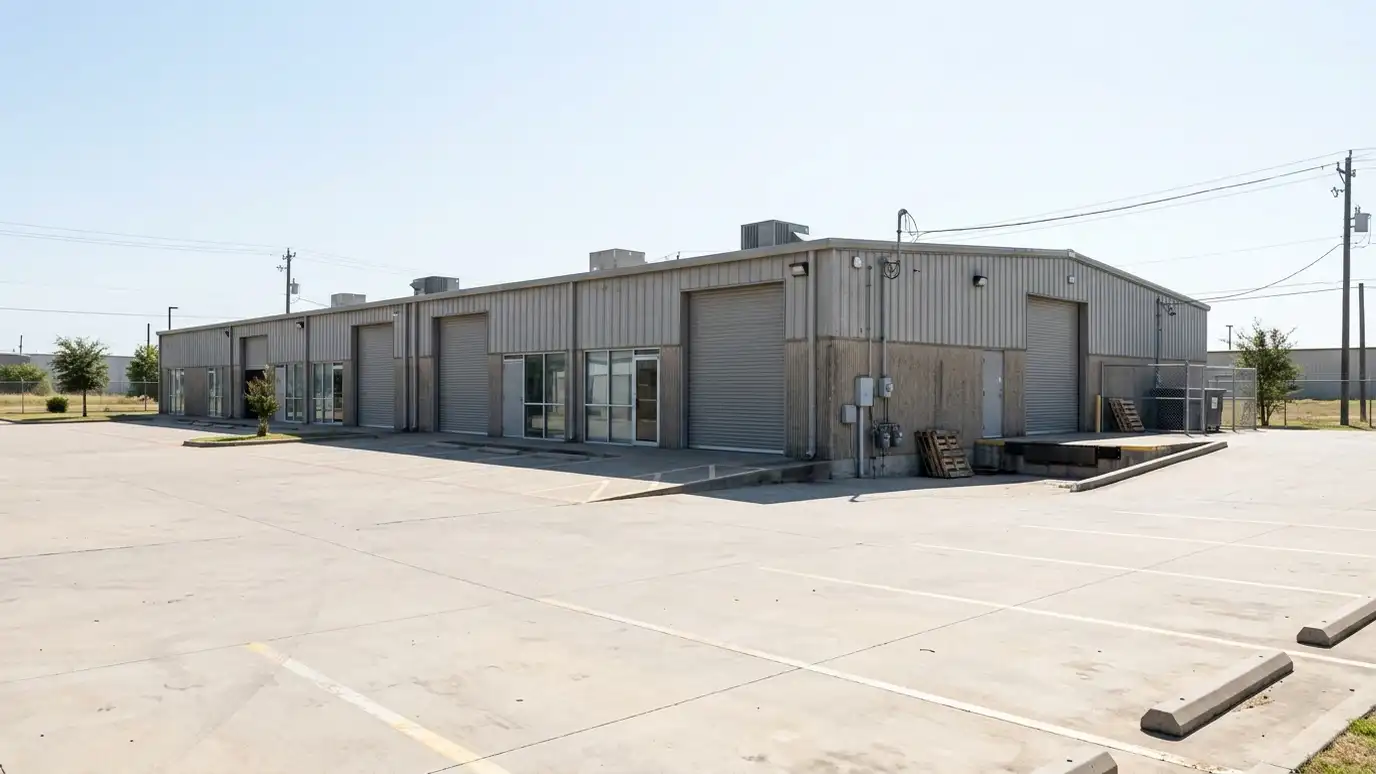 Site situationCommercial and Light Industrial SitesParking lots, docks and floors take hard daily use. Here is how to plan commercial concrete that lasts.Learn more
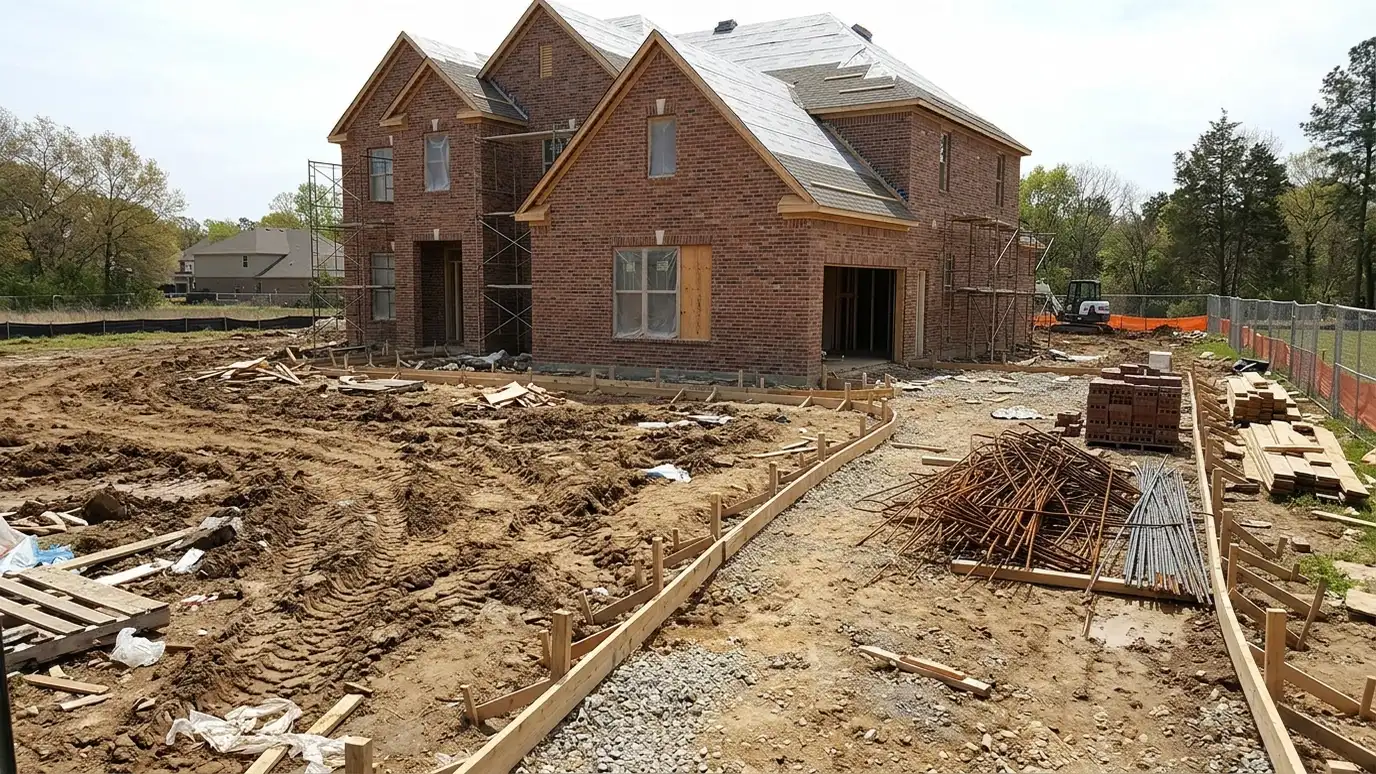 Site situationNew Construction LotsA new build needs concrete poured in the right order. Here is how to plan footings, slabs, drives…Learn more
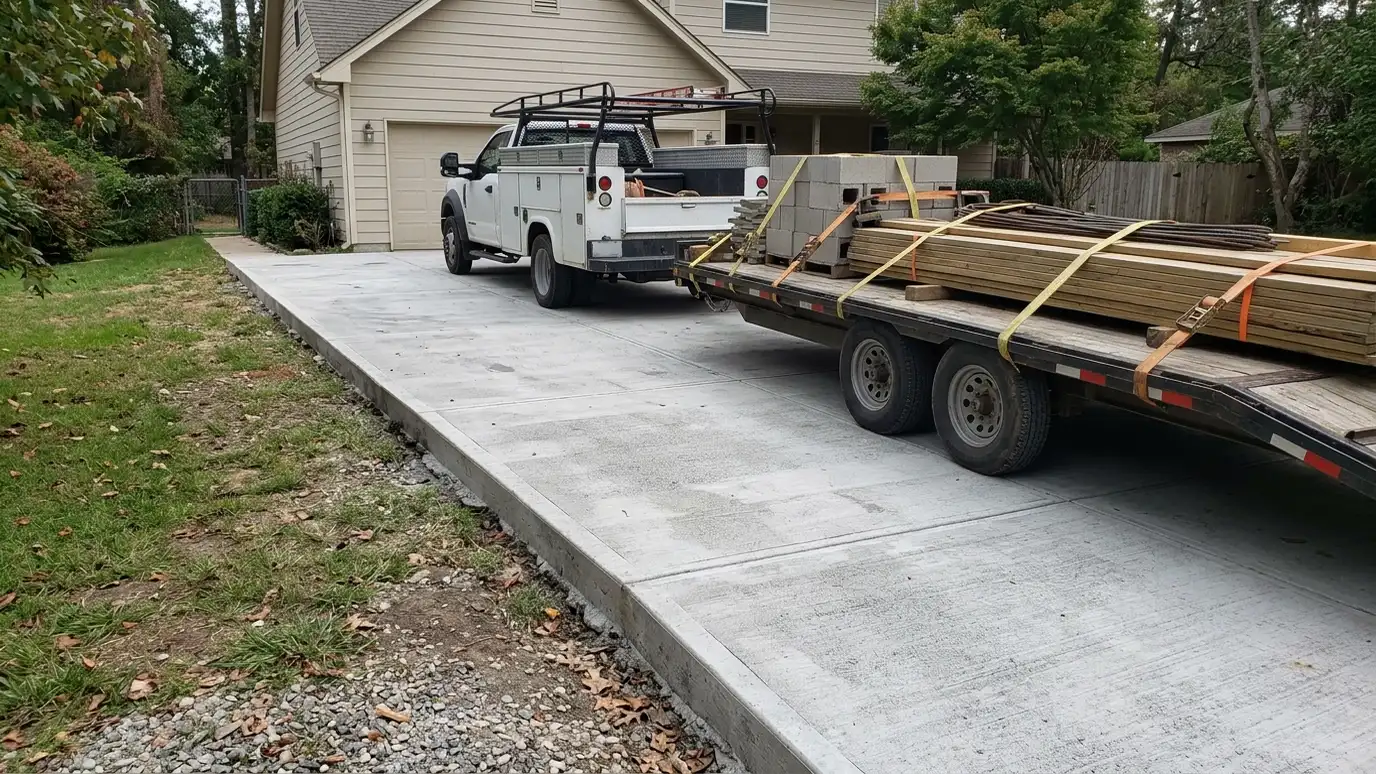 Site situationHeavy-Use DrivewaysTrucks, trailers and RVs need more than a basic slab. Here is how thickness, steel and base work…Learn more
Enter length, width and thickness to see cubic yards, bags and truck loads for a slab, with a waste allowance.
You tell us about your site and what you want, new concrete, a repair or a refresh, and we set a visit that fits your day.
We walk the property, measure the area, check drainage, soil and access, look at any old concrete and take photos of anything of note.
We explain your options for thickness, steel, finishes and colors, sketch the layout and give you a written scope with clear timing and pricing.
We arrange for underground utilities to be located, protect the house, lawn and landscaping, remove old concrete if needed and compact a stone base.
We set forms and steel, check heights and slopes, place and finish the concrete and cut joints, with the crew on site from the first truck to the last pass.
We protect the concrete as it cures, clean up the site, walk you through when to use it and seal it, and set a reminder for your next check.
Often six inches or more with steel, depending on loads. The engineer or plan sets it.
Heavy wheels and open, unfilled joints chip the edges. Filling and dowels help.
Yes, we phase work and use fast-cure materials to limit downtime.
A liquid that hardens the surface and reduces dust.
Yes, with the right coating over a prepared surface.
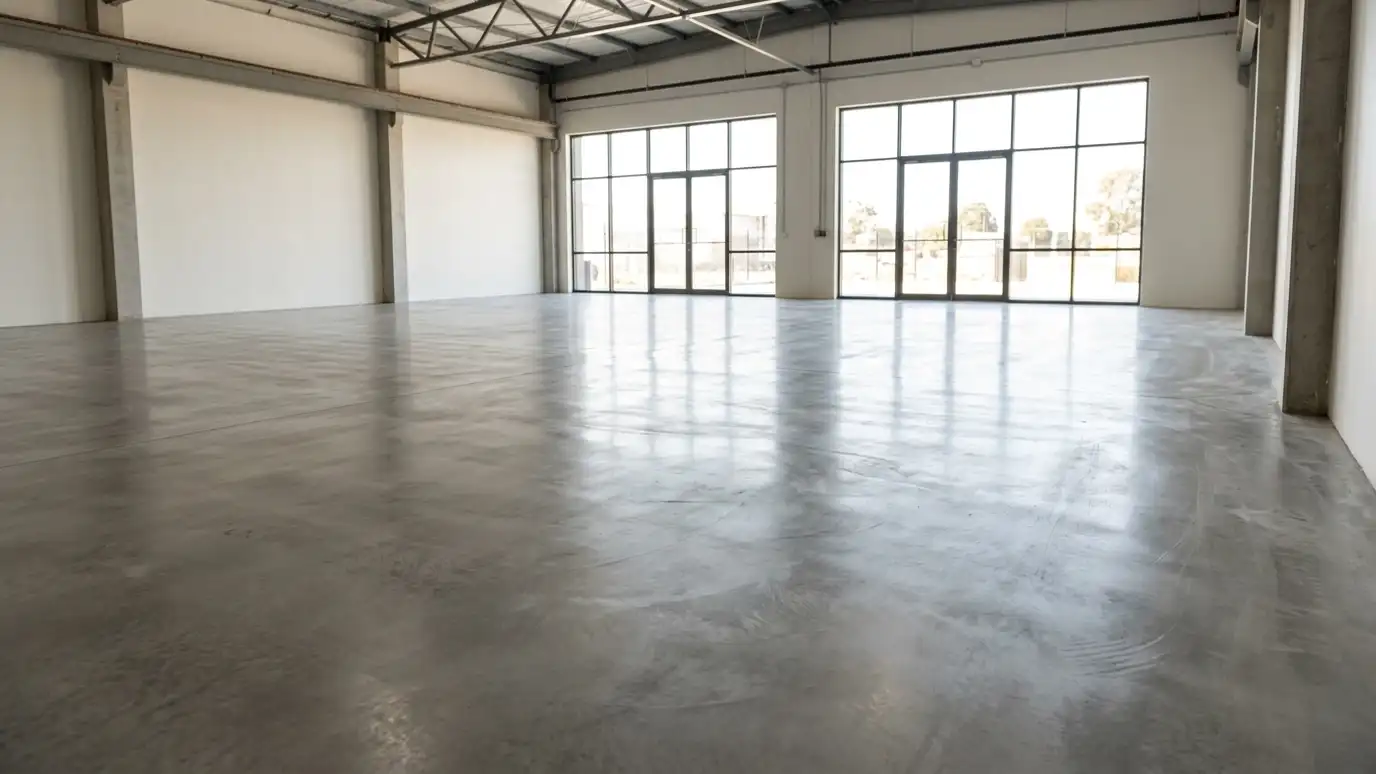 Concrete FlooringSmooth, durable concrete floors for shops, garages, retail spaces and homes, flat to the tolerance your use demands.Explore
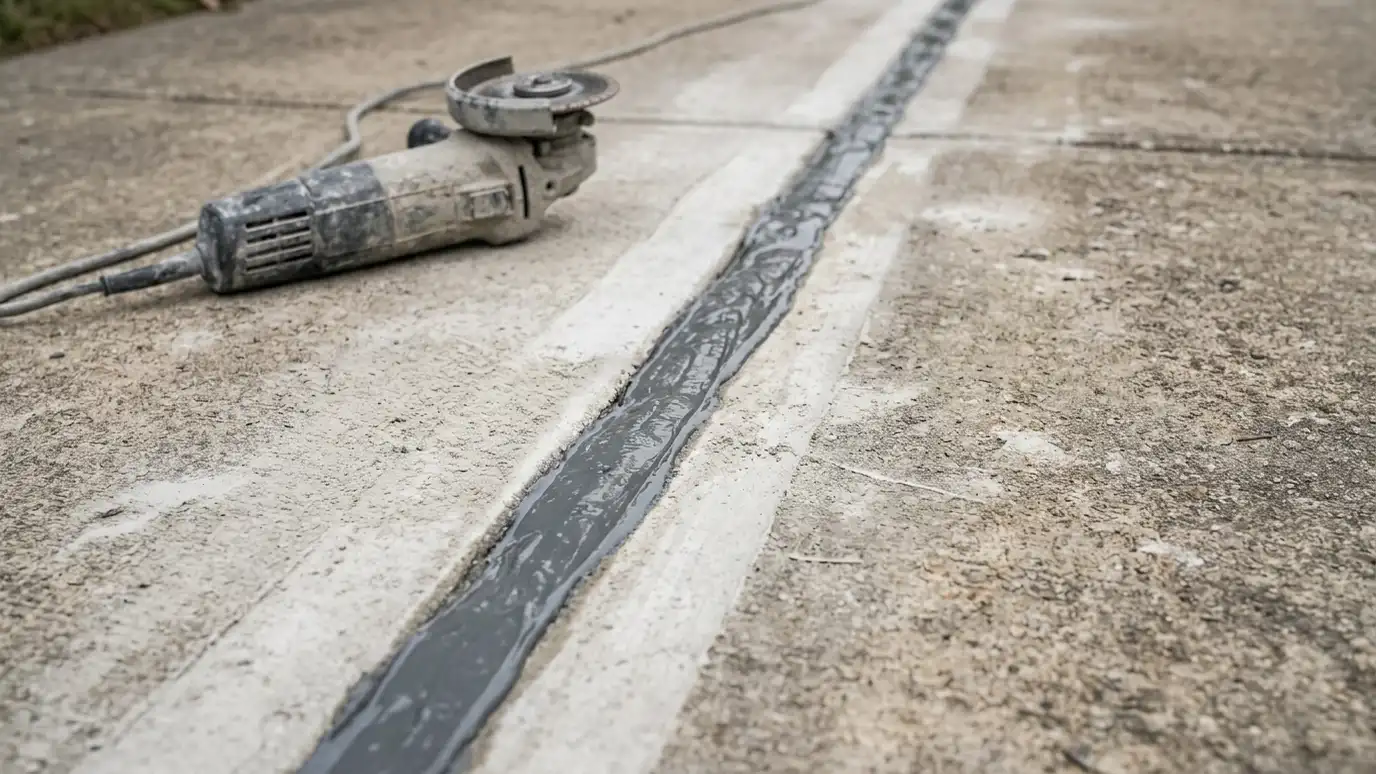 Joint Sealing and GrindingFlexible joint sealants and diamond grinding that keep water out of slab joints and remove small trip edges…Explore
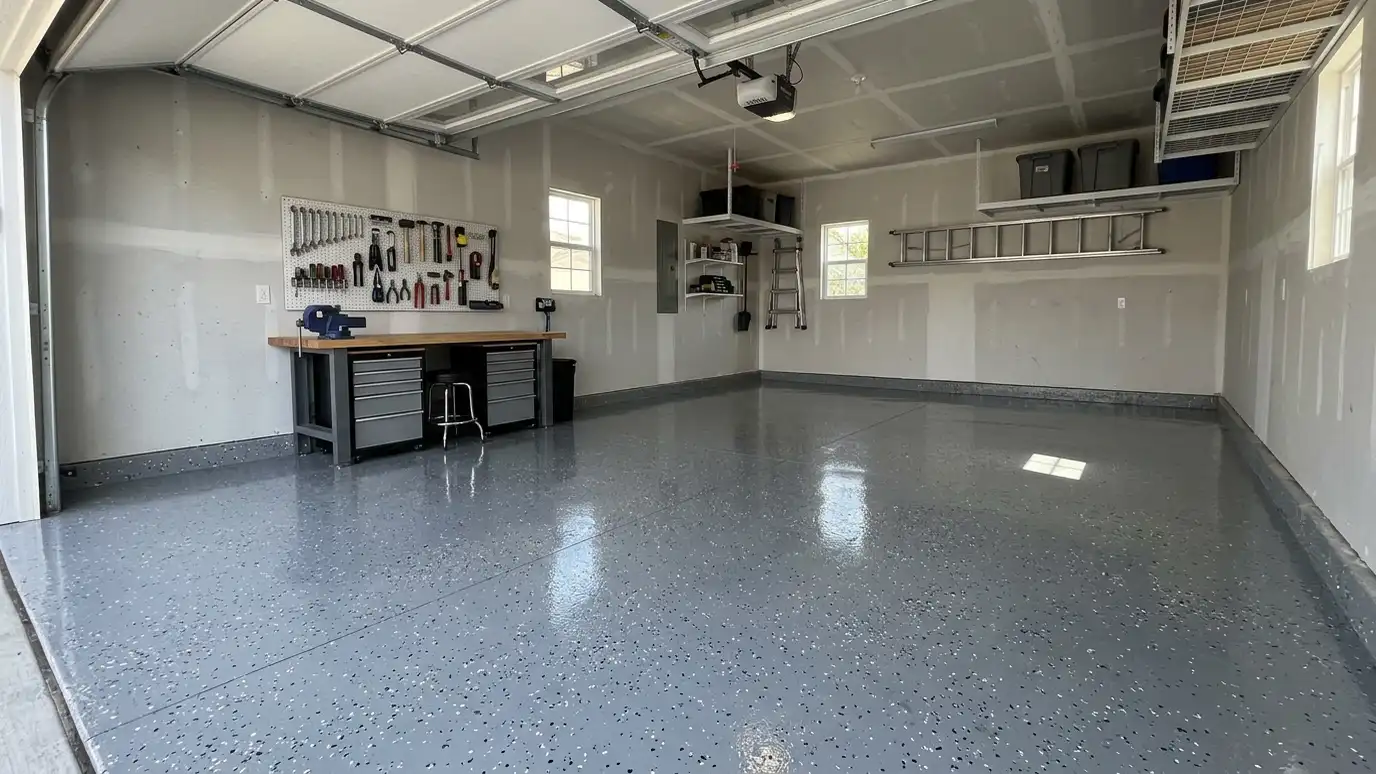 Garage Floor CoatingsEpoxy, polyaspartic and polyurea garage floor coatings that resist oil, tires and chemicals, installed over properly prepared concrete.Explore
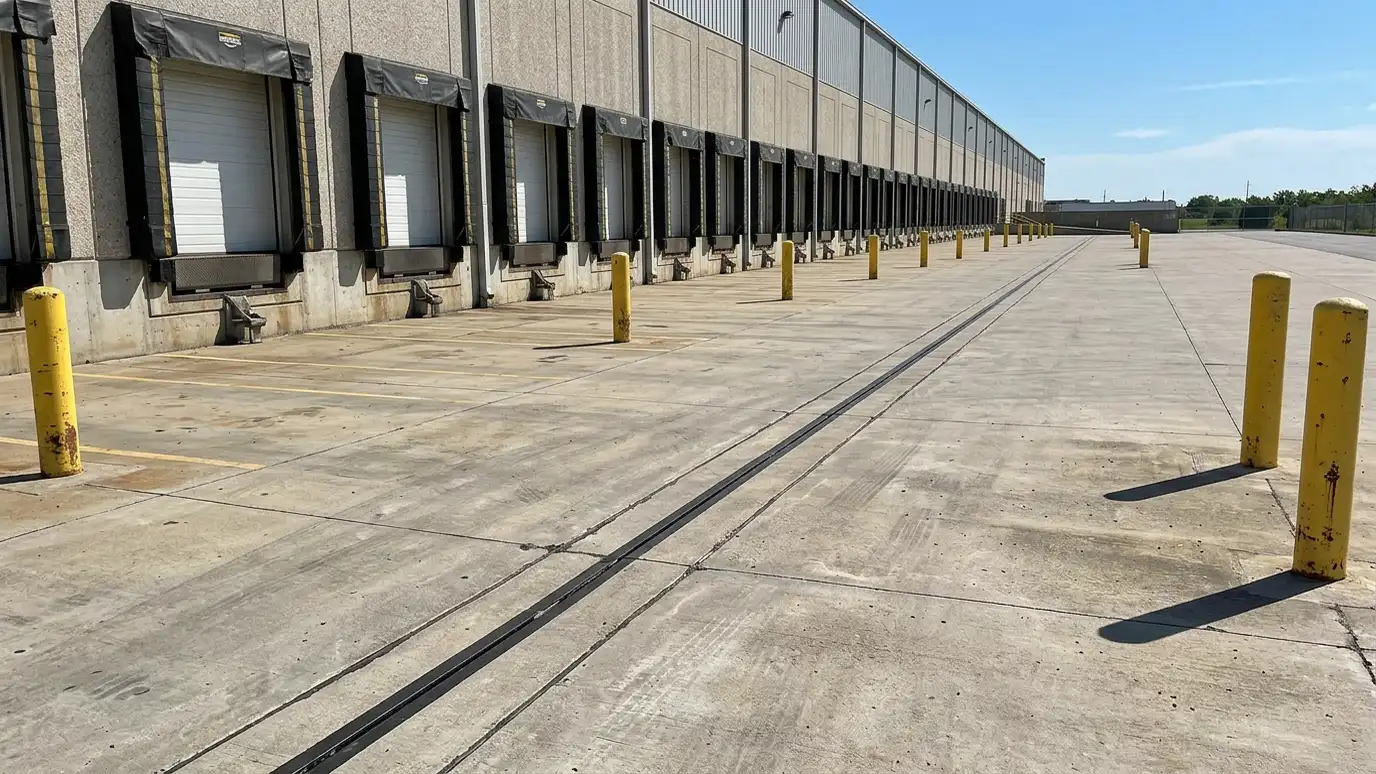 Parking Lots and DocksHeavy-duty concrete pavement for parking areas, truck courts, loading docks and drive lanes, with drainage and layout built…Explore
Tell us about the project and we will call you back to talk it through.
Or call (615) 357-7797 to talk now.